
 EN
EN  EL
EL  DE
DE  ES
ES  HU
HU  FR
FR  PL
PL 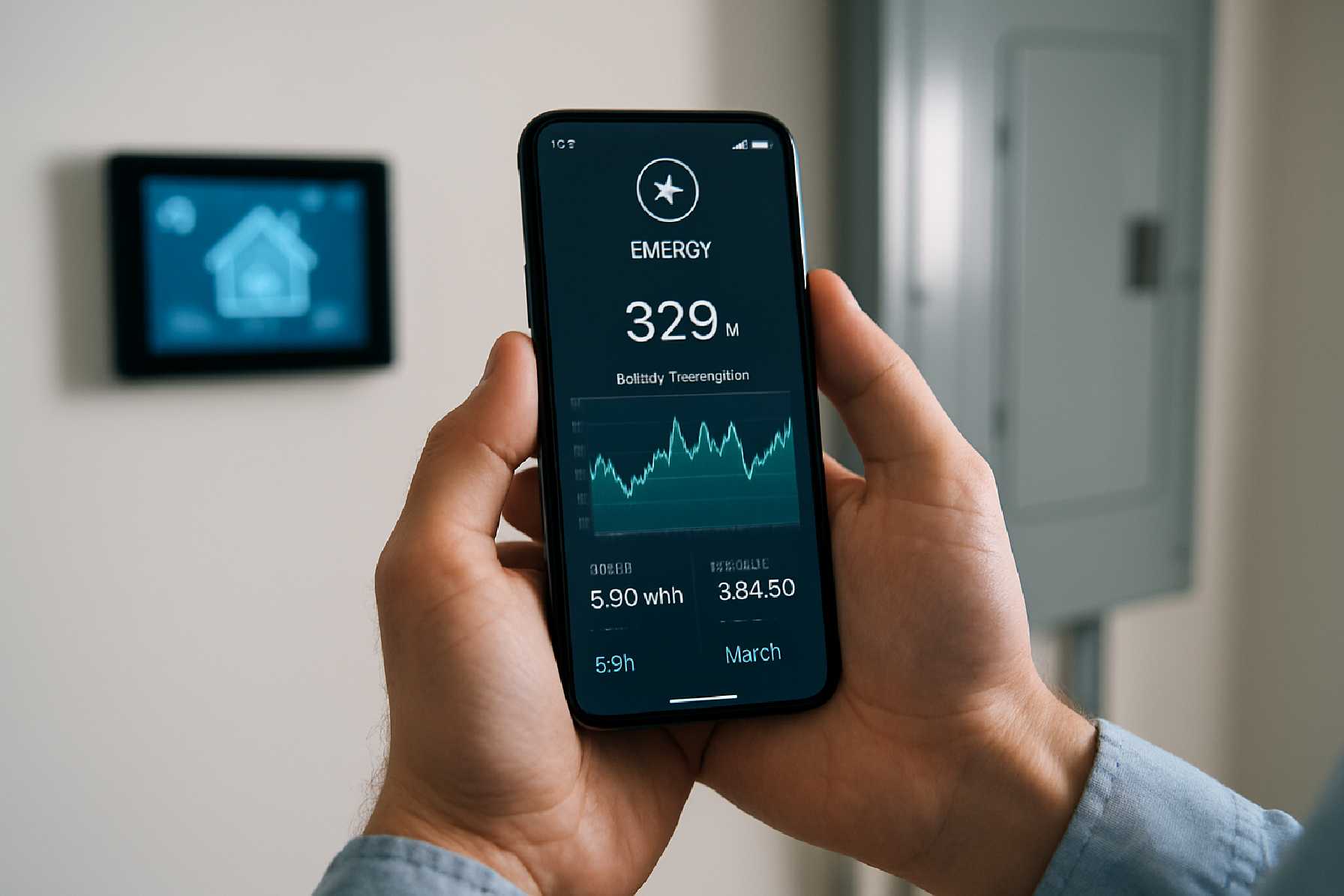
How Mobile App Development Is Changing Energy Management
Energy management used to be a back-office function. Utilities monitored the grid, facility teams checked building systems, and households saw their electricity use only after the bill arrived. That model is changing. Today, mobile apps put energy data in people’s hands in real time, turning consumption from a hidden operational detail into something visible, measurable, and increasingly manageable.
This shift matters for two reasons. First, energy has become a strategic issue for households, businesses, cities, and regulators. Second, smartphones have become the most practical interface for turning complex energy systems into everyday decisions. In that sense, mobile app development is no longer peripheral to the energy sector. It is becoming one of the main ways users interact with it.
The result is a growing class of digital products designed to help people understand how energy is used, where waste occurs, and what actions may improve efficiency. These applications range from consumer tools connected to smart thermostats and meters to enterprise dashboards for facilities, fleets, and distributed energy assets.
The broader promise is not that apps solve energy problems on their own. Rather, they make energy systems easier to observe, easier to control, and in some cases easier to optimize. That distinction is important for product teams, software leaders, and decision-makers evaluating whether a mobile product can create measurable value in sustainability and operations.
Why Energy Management Has Become a Mobile Product Opportunity
The rise of energy applications is tied to several structural changes. Smart devices are more common, connected sensors are cheaper, cloud infrastructure is more mature, and users now expect remote control over physical systems. At the same time, energy prices, emissions targets, and corporate sustainability reporting have made efficiency a boardroom issue rather than a purely technical one.
Research cited in the source material points to strong market momentum. MarketsandMarkets projected that the global energy management apps market would grow from $17.8 billion in 2022 to $35.4 billion by 2027. The same source also projected continued expansion in the smart grid market, supported by grid modernization and rising energy demand.
Those market signals align with a wider energy transition. According to the UNEP and Frankfurt School report mentioned in the source text, global renewable energy investment reached $303.5 billion in 2020. As more energy systems become distributed and data-rich, the software layer becomes more important. In practice, that means better interfaces for monitoring, alerts, automation, and reporting.
For mobile product development teams, this is a compelling use case because the phone is often the fastest route to adoption. Employees carry it, homeowners already use it, and operations managers can respond through it without logging into a desktop control room. That convenience, however, only matters if the app translates technical data into decisions people can actually make.
What Energy Management Apps Actually Do
The most valuable energy apps usually combine four core functions: visibility, analysis, control, and engagement.
Visibility is the foundation. Real-time monitoring allows users to see how much energy a home, office, or device is consuming at a given moment. That may sound simple, but it changes behavior. When a spike appears immediately after equipment starts running, the user does not need to wait for a monthly report to recognize the impact.
Analysis comes next. Good mobile application development in this category does more than display raw numbers. It turns consumption data into patterns: which hours are most energy-intensive, which systems appear inefficient, and whether current usage differs from historical baselines. For non-technical users, this layer is essential. Data without interpretation often creates confusion rather than action.
Control is where software begins to affect outcomes. Through integration with Internet of Things devices such as thermostats, lighting controls, blinds, smart plugs, and occupancy sensors, mobile apps can let users adjust settings remotely. In a commercial building, that may mean changing HVAC schedules after office hours. In a home, it may mean reducing heating or cooling before an empty afternoon.
Engagement is the least technical feature but often the deciding factor in long-term effectiveness. Some applications use notifications, goals, comparisons, or gamified progress indicators to keep users involved. Others aggregate local data to encourage community participation. In both cases, the app is trying to solve a common problem in energy software: people ignore tools that are useful only in theory.
Measured Impact: What the Available Research Suggests
The source text cites two notable findings. An IDC study found that users of energy management apps can reduce energy consumption by 10% to 20%. Research by EPRI, also cited in the source, indicates that these applications can contribute to a 10% to 20% reduction in carbon emissions.
Those figures are significant, but they should be read carefully. They point to the potential value of app-based energy management, not a guaranteed result for every deployment. Outcomes depend on context: the quality of the underlying metering, the degree of automation, how frequently people use the application, and whether the app is connected to systems users can actually control.
That is a familiar pattern in mobile software development. The app may be the visible product, but its impact depends on the full system around it: hardware integrations, data integrity, backend reliability, business rules, and user experience design. An elegant interface cannot compensate for delayed data, poor onboarding, or controls that are too complicated for busy users.
Still, the direction of travel is clear. Energy software is becoming more responsive, more personalized, and more operationally relevant. For businesses, that can support cost control and sustainability targets. For households, it can make consumption legible enough to influence daily choices.
What Makes an Energy App Useful Rather Than Merely Informative
Many energy apps fail for the same reason many enterprise apps fail: they surface information without creating usable decisions. A graph that shows kilowatt-hour consumption may satisfy a product requirement, but it does not necessarily help a building manager decide whether to investigate equipment, change a schedule, or escalate a maintenance issue.
In practical terms, effective mobile app design in this field depends on clarity and timing. Users need to know what changed, why it matters, and what action is available. A short alert that identifies unusual overnight consumption may be more valuable than a dashboard full of charts. Likewise, a recommendation to reduce peak load only matters if the user understands the trade-off and has permission to act.
This is also where role-based design matters. A homeowner, a facilities manager, and an energy analyst do not need the same interface. Custom mobile app development is often justified in energy management because the workflows are highly specific. A consumer app may prioritize ease, automation, and cost awareness. An enterprise app may need audit trails, multi-site reporting, and integration with existing operational systems.
Accessibility should not be treated as a secondary feature. Energy data can be dense and visually complex. Clear labels, readable charts, logical navigation, and support for users with different accessibility needs make the software more practical for real-world use. In regulated or public-sector environments, these considerations may also carry formal compliance implications.
The Technology Behind the Experience
From a technical perspective, energy apps sit at the intersection of mobile front ends, cloud services, device integrations, and analytics pipelines. The development approach depends heavily on the product’s scope.
For apps that rely on deep device integration or platform-specific capabilities, native iOS app development or Android app development may be the better choice. Native approaches can offer stronger performance, tighter access to operating system features, and smoother interaction with platform-specific device frameworks. They may also simplify certain user experience decisions when one platform has distinct interaction conventions.
Cross-platform app development can be appropriate when product teams need to move efficiently across iOS and Android with a shared codebase. That can reduce duplicated work, especially for dashboards, reporting interfaces, and standard user journeys. The trade-off is that some device-specific integrations, performance-sensitive screens, or advanced interactions may require extra engineering effort.
There is no universal winner here. The right approach depends on how much of the product is data presentation versus hardware control, how complex the integrations are, and how important platform-specific optimization is to the user experience.
Backend architecture matters just as much as the mobile layer. Energy apps often process data from smart meters, sensors, building systems, and third-party platforms. That means mobile app developers must think early about scalability, data synchronization, offline behavior, authentication, and API reliability. If a manager opens the app during a peak-load event and sees stale data, trust in the product erodes quickly.
Security, Privacy, and Reliability Are Not Optional
An energy app may look like a simple dashboard, but in many cases it is connected to operational infrastructure. That raises the stakes for security. If the app can control HVAC systems, lighting, charging equipment, or distributed energy assets, access management becomes central to the product strategy.
General security best practices apply: secure authentication, encrypted data in transit, strong authorization controls, logging, and regular maintenance. But teams should be careful not to confuse general good practice with formal compliance. Security obligations vary depending on geography, sector, customer type, and the systems involved.
Reliability is equally important. In consumer products, occasional downtime is frustrating. In commercial or industrial energy contexts, it can affect operations. That does not mean every app requires extreme infrastructure complexity, but it does mean product teams should define service expectations honestly and architect according to the real consequences of failure.
Maintenance is often underestimated in app development cost discussions. Initial release is only the beginning. Integrations evolve, operating systems change, app store requirements are updated, analytics need refinement, and device ecosystems expand. In energy products, ongoing support is especially important because the app is often connected to hardware and external data systems that change over time.
Where AI, Predictive Features, and Blockchain Fit
The source text highlights several emerging trends, including AI-powered analytics, blockchain integration, gamification, and predictive maintenance. These are real areas of experimentation, but each should be approached with discipline.
AI-powered analytics can help identify anomalies, forecast demand, or surface patterns users would miss in raw data. Grand View Research, as cited in the source text, projected growth in AI-powered energy management through 2028. Even so, artificial intelligence is most useful when it supports a specific operational question. Vague “smart insights” are less valuable than a clearly explained recommendation tied to an identifiable pattern.
Predictive maintenance is a good example. If connected systems generate enough reliable data, algorithms may help detect behavior associated with future faults or inefficiencies. That can reduce downtime and improve performance. But it requires data quality, historical baselines, and domain validation. It is not a feature that can be added credibly just because AI is fashionable.
Blockchain receives attention in discussions of transparent energy trading and decentralized energy ecosystems. In certain peer-to-peer or audit-heavy scenarios, the model may have relevance. But for many mobile energy products, blockchain is not a default requirement. Product teams should start with the business need and only then evaluate whether distributed ledger technology meaningfully solves it.
Gamification is often more practical than it sounds. Used carefully, it can improve retention and behavior change by making efficiency goals visible and rewarding. Used poorly, it can trivialize the subject or annoy users. As with other features, context determines value.
Business Considerations for Teams Building in This Category
For an app development company or in-house product team, energy management is not just a technical build. It is a domain-heavy product category. Requirements often depend on local utility structures, hardware ecosystems, sustainability objectives, and operational realities.
That complexity affects the app development process. Discovery work matters. Teams need to understand who acts on the information, what systems can be controlled, what data is trustworthy, and how success will be measured. In some projects, the most important feature is not a sophisticated dashboard but a clear alerting workflow that saves a site manager from checking multiple systems manually.
Cost and timeline are also variable. App development cost in this sector can differ widely depending on platform choice, integrations, security requirements, analytics depth, design complexity, and maintenance obligations. A lightweight consumer companion app is a very different undertaking from a multi-site enterprise operations platform. Any serious planning process should reflect that difference rather than rely on generic estimates.
For companies entering this space, domain expertise can be as important as technical skill. Mobile product development succeeds when software teams understand not only how to build the app, but also how energy users make decisions under real constraints.
The Larger Significance
The deeper impact of applications on energy management is not simply convenience. It is the reconfiguration of who can see energy, who can influence it, and how quickly action can follow insight. That has implications for sustainability, operating costs, and the design of future digital services.
As the source material argues, mobile applications are helping make energy management more accessible. That may be their most important contribution. Energy systems are often technically dense and institutionally complex. When software reduces that complexity without hiding what matters, it gives more people the ability to participate in efficiency and sustainability efforts in practical ways.
That does not remove the hard parts. Data quality, system interoperability, user adoption, and long-term maintenance remain difficult. But the direction is unmistakable: the mobile interface is becoming one of the key control points in modern energy management.
Summary of the Main Considerations
| Issue | Why It Matters | Main Opportunity | Key Limitation or Risk |
|---|---|---|---|
| Real-time monitoring | Gives users immediate visibility into consumption | Faster identification of waste and unusual usage | Low value if data is delayed, inaccurate, or hard to interpret |
| Smart device integration | Connects the app to systems users can control | Remote adjustment of HVAC, lighting, and related assets | Integration complexity varies by hardware and platform |
| Analytics and AI | Turns raw data into insights and forecasts | Better anomaly detection and operational recommendations | Depends on data quality and careful validation |
| Development approach | Affects performance, maintainability, and delivery speed | Native or cross-platform strategies can each fit different products | No single approach is best for every energy app |
| Security and reliability | Apps may connect to operational infrastructure | Protects control access and builds user trust | Underinvestment can create operational and reputational risk |
| User engagement | Energy apps only help when people continue using them | Alerts, goals, and clear actions can improve retention | Overcomplicated interfaces often reduce adoption |
Questions Readers Should Ask Before Building or Adopting an Energy App
Before moving into design or procurement, teams should ask a few practical questions.
What specific decision should the app help a user make: monitor usage, reduce peaks, control devices, investigate anomalies, or report performance?
How reliable and accessible is the underlying data, and do users have enough control over connected systems to act on what the app shows?
Would native development or cross-platform app development better support the required integrations, performance needs, and maintenance model?
What security, privacy, and operational reliability expectations apply in this environment, and who is responsible for maintaining them over time?
How will success be measured after launch: adoption, energy savings, reduced emissions, faster response times, or lower operational costs?
Conclusion
The impact of applications on energy management is becoming harder to ignore. Mobile software is helping users monitor consumption in real time, connect to smart devices, identify inefficiencies, and engage more directly with sustainability goals. Research cited in the source material suggests the potential for meaningful reductions in both energy use and emissions, while market forecasts point to continued growth in this category.
For software leaders and digital product teams, the lesson is straightforward. Energy apps create value when they combine sound engineering with practical usability and domain understanding. The strongest products do not simply display information. They help people act on it.
That is ultimately where mobile app development has its greatest influence in energy management: not in making the system look modern, but in making a complex system understandable, responsive, and operationally useful.