
 EN
EN  EL
EL  DE
DE  ES
ES  HU
HU  FR
FR  PL
PL 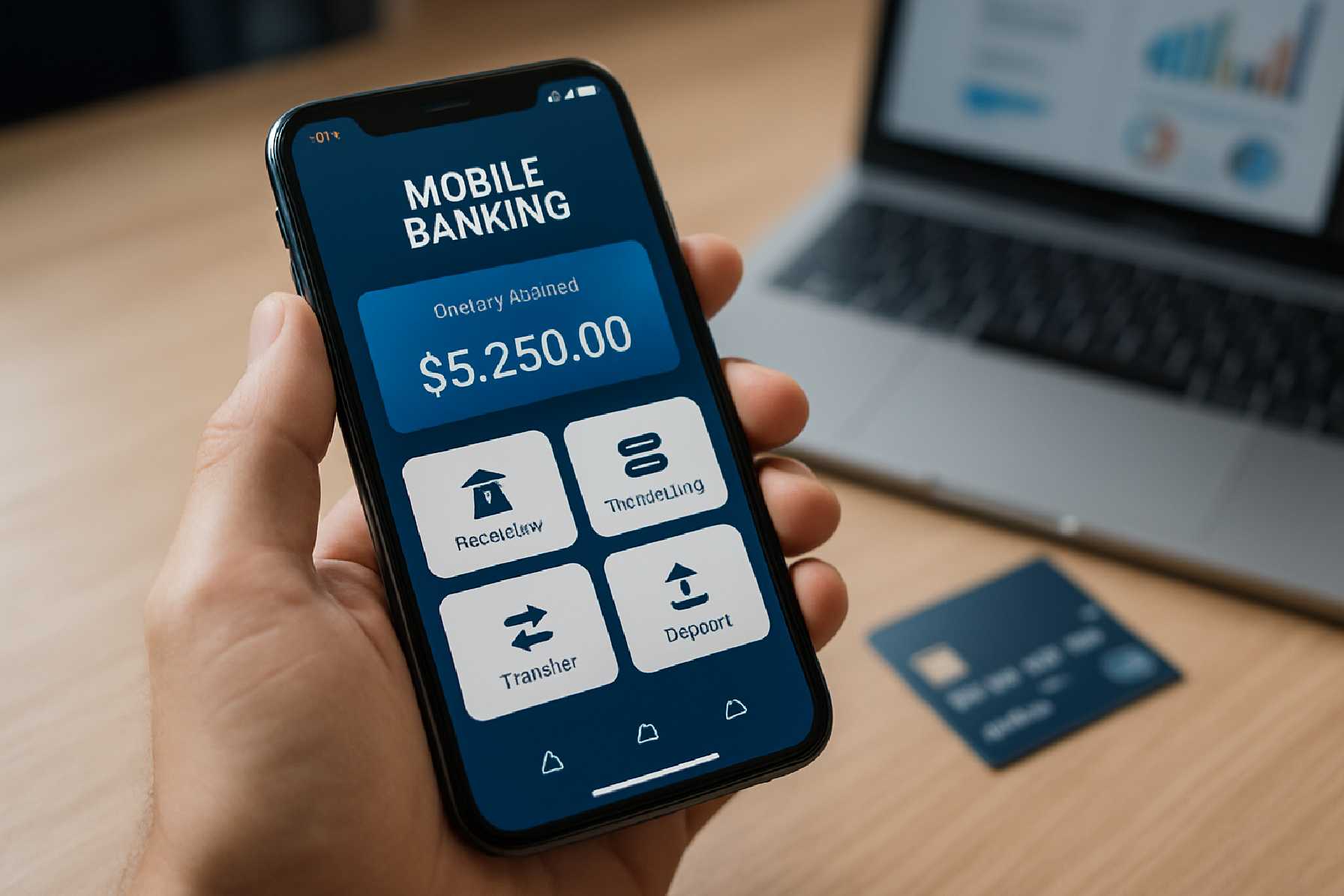
How Mobile App Development Is Reshaping Banking and Financial Services
Banking used to happen in branches, then on desktop websites, and now increasingly in the palm of a hand. That shift is not just about convenience. It reflects a deeper transformation in how financial products are designed, delivered, and improved. In banking and finance, mobile app development has moved from being a support function to becoming a core business capability.
What started as simple mobile interfaces for checking balances and reviewing transactions has evolved into a much broader digital layer. Today’s financial apps help users transfer money, pay bills, apply for loans, monitor investments, receive fraud alerts, and interact with automated support tools. For product teams, banks, fintech companies, and mobile app development partners, the challenge is no longer whether to build a mobile experience. It is how to build one that is secure, usable, scalable, and trusted.
The growth of mobile banking is backed by strong demand. According to Statista, the number of mobile banking users worldwide is projected to reach 3.9 billion by 2025. That scale matters. It means mobile financial products are no longer niche digital channels. They are the primary banking interface for a very large share of consumers.
From Balance Checks to Full-Service Financial Platforms
The first generation of banking apps was narrow in scope. Users could log in, check account balances, review recent transactions, and perhaps locate the nearest ATM. Those features were useful, but they did not fundamentally change the relationship between the customer and the bank.
That changed as smartphones became more capable and user expectations rose. Banks and fintech firms began treating the app not as a reduced version of online banking, but as a product in its own right. In practical terms, that meant building deeper functionality into mobile experiences.
Modern financial apps often include:
Real-time payment processing and peer-to-peer transfers
Digital onboarding and identity verification
Loan or credit applications
Budgeting and cash-flow tracking tools
Stock trading and portfolio monitoring
Chat-based customer support
Personalized spending insights and alerts
This expansion reflects a broader trend in mobile product development. Users increasingly expect a single app to handle an entire financial journey rather than one isolated task. A banking app is now part transaction tool, part service platform, and part data-driven advisory channel.
Why Mobile App Development Matters So Much in Finance
In many industries, a mobile app improves convenience. In finance, it can change operating economics and customer behavior at the same time.
For customers, the value is obvious: 24/7 access, fewer branch visits, faster service, and better visibility into personal finances. A salary deposit, card freeze, international transfer, or suspicious transaction alert can all be handled within seconds. This immediacy is especially important in moments of financial stress, when waiting for branch hours or call-center queues can damage trust.
For banks and financial institutions, the benefits are strategic. A well-designed app can lower servicing costs, reduce dependence on physical infrastructure, increase customer engagement, and generate behavioral data that helps improve products. That does not mean every new feature automatically creates value. It means mobile software development gives institutions a direct, measurable interface with users.
Research cited by Forrester has found that mobile banking users often report higher satisfaction than non-users. That finding aligns with what many product teams already know: when routine tasks become simpler, people use services more often and with less friction.
Technologies Driving the New Generation of Financial Apps
The most important changes in banking apps are not only visual. Much of the progress comes from technical infrastructure and smarter application architecture.
Artificial Intelligence and Machine Learning
Artificial intelligence is widely discussed in financial technology, but its most useful applications are usually narrow and specific. In mobile banking, AI and machine learning are commonly used for transaction categorization, fraud detection, customer support routing, and personalized financial recommendations.
For example, investment platforms such as Wealthfront have popularized automated portfolio management for retail users. The core idea is simple: software helps allocate and rebalance investments according to user goals and risk preferences. That does not make human financial advice obsolete, and it does not eliminate market risk. But it does lower the threshold for access to basic investment management tools.
For product managers, the main lesson is practical. AI features work best when they solve a clear user problem, such as identifying unusual account activity or surfacing a recurring subscription a customer may want to cancel. They are less effective when added as vague “smart” layers without a clear purpose.
Blockchain and Digital Assets
Blockchain is often discussed in broad, abstract terms, but in consumer finance apps its most visible use has been in cryptocurrency platforms. Apps such as Coinbase helped make buying, selling, and storing digital assets more accessible to mainstream users.
Still, blockchain is not a universal solution for every financial app. In some cases, it offers advantages around decentralized asset transfer and transparent transaction records. In others, traditional databases remain more efficient, simpler to maintain, and easier to align with regulatory and operational requirements. For development teams, the right question is not whether blockchain is innovative. It is whether it fits the product’s legal, technical, and customer-use context.
Biometric Authentication
Biometric login, including fingerprint and facial recognition, has become standard in many banking apps. Its appeal is straightforward: it can strengthen account access while reducing password friction.
That said, biometrics are usually one layer in a larger security model, not a complete security strategy by themselves. Secure session management, device trust checks, encryption, and fallback recovery flows all remain necessary. In mobile application development for finance, convenience and security have to work together rather than compete.
The Design Problem: Making Complex Financial Tasks Feel Simple
Financial products are inherently complex. Interest rates, transaction states, account permissions, compliance requirements, and payment rails do not naturally translate into elegant mobile screens. One of the hardest parts of mobile app design in finance is turning institutional complexity into an interface ordinary users can understand and trust.
That usually means reducing cognitive load. A transfer flow should clearly show the sender, recipient, amount, fees if applicable, and confirmation state. A loan application should break large forms into manageable steps. A spending dashboard should prioritize useful patterns rather than overwhelm users with charts.
Accessibility also matters. Financial apps are essential services, not optional entertainment products. Clear typography, support for screen readers, logical navigation, sufficient color contrast, and understandable error messages are not cosmetic refinements. They are part of building a product that more people can use safely and confidently.
Trust is shaped by details. A delayed confirmation screen, an unclear status message, or a broken password reset journey can create anxiety far out of proportion to the technical issue itself. In banking, user experience is inseparable from perceived reliability.
Native, Cross-Platform, and the Real Trade-Offs
Teams building financial apps often face a common decision: should they prioritize native iOS app development and Android app development separately, or pursue cross-platform app development with a shared codebase?
There is no universal answer. Native development can offer tighter integration with device features, strong performance control, and platform-specific UX refinement. That can be valuable for security-sensitive interactions, complex animations, or apps that require deep hardware integration.
Cross-platform app development can reduce duplication across teams, accelerate delivery for some product roadmaps, and simplify maintenance in organizations that need feature parity across iOS and Android. But those benefits depend heavily on the app’s complexity, team expertise, testing discipline, and integration requirements.
For financial services, the decision should be based on product requirements rather than ideology. A lightweight retail banking app and a feature-rich trading platform may justify different technical approaches. The same is true for custom mobile app development in regulated enterprise environments, where internal systems, authentication requirements, and audit needs may shape architecture more than front-end preferences do.
Security Is a Product Requirement, Not a Feature Add-On
Security concerns are central to any discussion of mobile banking. Financial apps handle sensitive personal data, account credentials, payment instructions, and often identity information. That makes them a high-value target for attackers and a high-responsibility environment for developers.
Common security practices in this space include end-to-end encryption where appropriate, multi-factor authentication, biometric verification, secure API design, session timeout controls, and careful storage policies for sensitive data. These are best practices, not guarantees. Security depends on implementation quality, ongoing monitoring, incident response readiness, and regular updates.
Compliance also plays an important role. Standards and regulations such as PCI DSS and GDPR influence how payment data and personal information are handled. Their exact applicability varies by business model, geography, and data flows. Product teams should therefore distinguish between broad good practice and formal legal compliance obligations.
Just as important is maintenance. A secure launch is not enough. Mobile operating systems change, third-party libraries require updates, new vulnerabilities emerge, and threat patterns shift. In banking, post-launch maintenance is part of the product strategy, not a secondary operational task.
The Democratization of Financial Services
One of the most consequential outcomes of financial app growth is wider access. Services once associated with wealthier or more institutionally connected users are now available through consumer-friendly interfaces.
Investment platforms illustrate this well. Robinhood helped popularize commission-free stock trading in a format that appealed to younger mobile-first users. Whatever one’s view of its broader market effects, the product clearly demonstrated how app-led design can reduce barriers to entry for retail investing.
The same pattern appears in budgeting tools, automated savings features, and micro-investment products. Mobile distribution lowers the cost of reaching users, while data-driven interfaces can personalize guidance at scale. That does not mean access automatically produces good outcomes. Simpler access to financial tools should still be paired with clear disclosures, responsible design, and user education.
What Mobile Product Teams Need to Consider Beyond Launch
In finance, the app development process does not end when the product appears in the App Store or Google Play. Release is only the beginning of operational reality.
Teams need to plan for performance under peak demand, support workflows, analytics, fraud monitoring, and version compatibility. They also need to decide which metrics actually matter. Daily active users may be useful, but in banking they are often less meaningful than successful transaction completion rates, authentication failures, support deflection, or time to resolve payment issues.
App development cost is another area where oversimplification causes problems. The cost of a banking app can vary significantly depending on platform scope, legacy integrations, security controls, compliance review, testing depth, and post-launch maintenance. A simple account-management app and a multi-product financial super app are not remotely comparable projects. Product leaders should treat budget estimates as scenario-based planning tools, not fixed truths.
Similarly, timelines depend on more than coding speed. Requirements definition, infrastructure dependencies, vendor approvals, app store review processes, penetration testing, and legal signoff can all affect delivery. In regulated sectors, discipline often matters more than speed.
Where Banking Apps Are Heading Next
Several trends are likely to shape the next phase of mobile banking, though they should be understood as directional developments rather than guaranteed outcomes.
Voice-enabled interactions may become more useful for low-risk tasks such as checking balances or requesting account information, though high-risk transactions will continue to require stronger verification and careful UX controls.
Augmented reality has been discussed for finance use cases such as branch or ATM discovery and visual spending analysis. It remains more experimental than essential, and its relevance will depend on whether it solves a real problem better than standard interface patterns.
Open banking is more substantial. Where regulations and market structures support it, APIs can allow third-party services to connect with bank data and payment capabilities in controlled ways. For users, that can create more integrated financial experiences. For institutions, it creates both opportunity and pressure: openness can enable innovation, but it also raises expectations around security, reliability, consent management, and developer governance.
Internet of Things integration is another emerging area, though its practical value in consumer banking will depend on security and clear use cases. Connected devices can extend convenience, but they also expand the surface area of risk.
As digital banking expert commentary often notes, mobile applications are now inseparable from modern financial life. The key question is no longer whether people will bank through apps. It is how responsibly and effectively those apps will be built.
Summary: Core Decisions in Mobile Banking App Development
| Area | Why It Matters | Main Opportunity | Key Risk or Trade-Off |
|---|---|---|---|
| User experience | Financial tasks can be stressful and complex | Simpler flows improve trust, completion, and satisfaction | Oversimplification can hide important details or create confusion |
| Security and compliance | Apps handle sensitive financial and personal data | Strong controls protect users and strengthen brand trust | Security adds operational complexity and requires continuous maintenance |
| AI and automation | Can support alerts, insights, and service efficiency | Useful personalization and fraud detection at scale | Poorly scoped AI features can be opaque, inaccurate, or overhyped |
| Native vs. cross-platform development | Affects performance, team structure, and release strategy | Can optimize delivery speed or platform quality depending on approach | No single approach fits every banking product |
| Open banking and integrations | Expands product ecosystems and service options | More connected user experiences and new business models | More dependencies, governance needs, and security exposure |
| Cost and maintenance | Financial apps require long-term support | Stable products can reduce service costs and improve engagement | Underestimating maintenance leads to technical and operational debt |
Questions Readers Should Ask Before Building or Expanding a Financial App
Before committing to a new banking or finance product, decision-makers should pressure-test the fundamentals. These questions help clarify priorities:
Which customer problems truly need a mobile solution, and which features are essential at launch versus better suited for later releases?
What level of security, compliance review, and operational monitoring is required for the specific data, transactions, and markets involved?
Would native iOS and Android app development provide a clear product advantage, or would cross-platform app development better match the team’s roadmap and maintenance capacity?
How will the product handle post-launch realities such as fraud detection, analytics, support volume, app updates, and third-party integration changes?
What outcomes will define success: more active users, lower servicing costs, higher transaction completion rates, improved retention, or expanded access to financial services?
Conclusion
Mobile banking is no longer an extension of digital finance. It is the center of it. The most effective financial apps combine strong engineering, careful product thinking, transparent design, and continuous security work. They do not just make banking faster. They change what users expect from financial services altogether.
For banks, fintech firms, and mobile app developers, the opportunity is substantial, but so is the responsibility. In a category built on trust, mobile product decisions carry business, technical, and human consequences. The winners in this space will not be those who simply add more features. They will be the ones who build reliable, understandable, and secure financial experiences that people can confidently use every day.