
 EN
EN  EL
EL  DE
DE  ES
ES  HU
HU  FR
FR  PL
PL 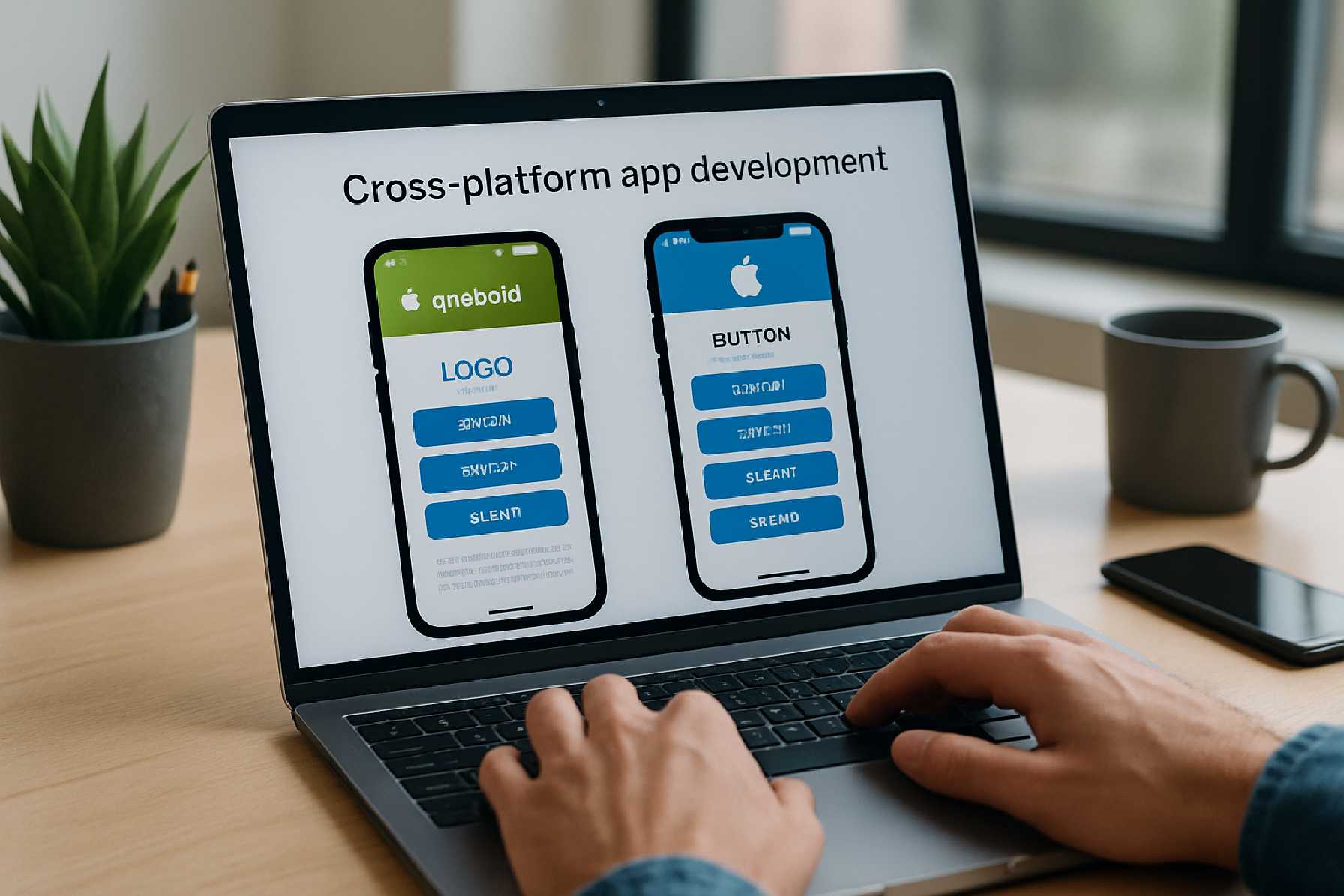
The Rise of Cross-Platform Mobile App Development: Speed, Reach, and the New Product Strategy
For years, companies entering mobile had to make an early and expensive choice. Build separately for iPhone and Android, or limit the product to one platform and accept a smaller audience. That trade-off shaped budgets, hiring plans, release schedules, and often the product itself.
That equation has changed. Cross-platform app development has moved from a niche technical option to a serious mainstream strategy in mobile app development. Instead of maintaining two largely separate codebases, teams can now build much of the application once and deploy it across multiple operating systems, usually with selective native work where needed.
The appeal is obvious. Businesses want faster launches, more efficient teams, and a consistent user experience across devices. Product managers want to test ideas in the market without doubling engineering effort. Developers want tools that reduce duplication without forcing unacceptable compromises in performance or platform quality.
Still, the story is more nuanced than the familiar slogan “write once, run anywhere.” Cross-platform tools have improved dramatically, but they are not a universal replacement for native iOS app development or Android app development. The real question is not whether cross-platform is good or bad. It is when it is strategically appropriate, what trade-offs it introduces, and how it changes the modern app development process.
Why cross-platform development gained momentum
At the center of cross-platform development is a straightforward idea: share as much code as possible across platforms. In practical terms, that can mean using one framework, one product logic layer, one design system, and one release process for both iOS and Android, while still handling device-specific behaviors when necessary.
For businesses, this can reduce duplication in mobile software development. Instead of staffing entirely separate teams, organizations may be able to align product, design, testing, and engineering around a single implementation strategy. That does not eliminate complexity, but it often makes complexity easier to manage.
Time-to-market is another major driver. In competitive categories such as retail, fintech, healthcare, logistics, and consumer subscriptions, launching six months earlier can matter more than launching with perfect technical purity. A startup testing product-market fit, for example, may care less about extracting every ounce of platform-specific optimization and more about learning quickly from real users on both operating systems.
There is also a user experience argument. A shared codebase can help teams maintain consistency in navigation, branding, feature parity, and release cadence. That matters to companies operating across regions, devices, and customer segments. In mobile product development, inconsistency between platforms often creates support costs, design debt, and internal friction.
None of this means cross-platform always costs less. The final app development cost still depends on scope, integrations, backend architecture, security requirements, QA effort, design complexity, and long-term maintenance. But in many common scenarios, code sharing can improve efficiency enough to make the model attractive.
What cross-platform actually means in practice
Cross-platform is often discussed as if it were one uniform approach. It is not. In modern mobile application development, the term usually refers to frameworks that allow a significant portion of the interface and business logic to be shared while still producing apps that run on native platforms.
That is different from older browser-like wrappers that simply displayed web content inside a mobile shell. It is also different from fully native development, where teams write platform-specific code using each operating system’s preferred languages, tools, and UI conventions.
The practical result is a spectrum rather than a binary choice. A team may build most of an app with a cross-platform framework while handling payments, camera functions, biometric authentication, performance-sensitive animations, or deep operating-system integration through native modules.
This hybrid reality is important because it reflects how serious digital products are actually built. Very few teams choose an approach based on ideology alone. They choose based on feature requirements, hiring constraints, launch windows, and maintenance expectations.
The leading frameworks and why they matter
Several frameworks have shaped the current phase of cross-platform app development, each with a different philosophy and engineering model.
React Native, introduced by Meta, became one of the most influential options because it allowed teams familiar with JavaScript and component-based UI thinking to extend those skills into mobile. Its adoption by well-known companies helped establish credibility. In practice, React Native has often appealed to organizations that want to move quickly, share developer knowledge across web and mobile teams, and maintain flexibility through a large ecosystem.
Flutter, backed by Google, took a different route. Rather than depending heavily on native UI components, it renders its own interface and emphasizes visual consistency and expressive design. That approach helped Flutter earn a reputation for polished interfaces and strong performance in many use cases. It has been especially attractive to teams that want a highly controlled design system across platforms.
Xamarin, associated with Microsoft and the .NET ecosystem, gained attention for enabling substantial code sharing and for fitting naturally into organizations already invested in C# and enterprise tooling. In some business environments, that alignment with existing skills and systems mattered as much as the mobile output itself.
These frameworks should not be treated as interchangeable. The right choice depends on team experience, plugin maturity, expected lifespan of the product, access to native APIs, testing strategy, and how much platform-specific customization the app requires.
What real adoption has shown
The broad rise of cross-platform development is not just a theoretical shift. Major companies have used these frameworks in real products, though often selectively rather than dogmatically.
React Native has been used in products associated with companies such as Instagram and Facebook. Flutter has been used in high-visibility apps including Google Ads, and Google has publicly discussed the framework as part of its broader multi-platform strategy. Xamarin has appeared in enterprise and customer-facing products where code sharing and integration with Microsoft-based workflows were valuable.
These examples are useful, but they need careful interpretation. A famous company using a framework does not automatically prove that the framework is right for every project. Large organizations can afford custom infrastructure, deep optimization, and specialist teams. What matters more is the underlying pattern: cross-platform has matured enough that serious companies are willing to trust it for meaningful parts of their mobile app development stack.
For smaller teams, that trust can be even more significant. A startup building a subscription service, a retailer launching a loyalty app, or an internal enterprise team replacing legacy field software may all prioritize development efficiency over platform-by-platform perfection. In such cases, cross-platform can offer a workable balance between speed and quality.
Where cross-platform performs well
Cross-platform development tends to work best when the app’s core value lies in workflows, content, account management, dashboards, booking flows, forms, messaging, e-commerce, and standard business logic. These are areas where shared architecture provides real leverage and where users mainly care that the app is reliable, intuitive, fast enough, and regularly updated.
It can also be effective when feature parity matters. Consider a financial services app that needs account access, notifications, onboarding, customer support, and transaction history to behave similarly across platforms. Running two entirely separate implementations can slow releases and create unnecessary drift between the iOS and Android experiences.
Cross-platform can be especially useful in MVP and early-stage product validation. When a team needs market feedback from both ecosystems quickly, a shared codebase can support faster iteration. That does not guarantee lower long-term maintenance, but it can reduce early duplication at a stage when product assumptions are still changing.
Where native development still has an advantage
Native development remains the stronger option in some important scenarios. If an application relies heavily on advanced graphics, intensive animation, low-level hardware interaction, or highly specialized platform behavior, native tools often offer more direct control and more predictable performance.
Games are the obvious example, but not the only one. Augmented reality, video processing, sophisticated audio workflows, or apps built around device-specific interactions may benefit from native implementation. In these environments, even small delays in adopting new operating system features can become a strategic limitation.
Native development can also make sense when platform experience itself is part of the product promise. Some premium consumer apps differentiate through details that feel deeply tuned to iOS or Android conventions. In those cases, the extra engineering effort may support a stronger brand experience.
This is why experienced mobile app developers rarely argue that one model has permanently won. The decision is contextual, and the strongest teams are usually the ones that understand the trade-offs clearly before writing code.
The performance question: better than before, still not irrelevant
Performance remains the most common concern around cross-platform app development, and for good reason. Users do not evaluate architecture choices; they evaluate responsiveness. They notice launch speed, animation smoothness, scrolling behavior, battery usage, and whether the app feels stable under real-world conditions.
Modern frameworks have narrowed the gap significantly in many categories. For a large class of business and consumer applications, performance is no longer the disqualifying weakness it once was. That is one reason cross-platform adoption has accelerated.
But “good enough” performance is not the same as “identical” performance. Teams still need disciplined engineering. Excessive plugin dependency, poorly designed state management, heavy rendering, weak testing, or a bloated release process can create problems regardless of framework. Cross-platform does not remove the need for optimization; it changes where optimization effort is spent.
A practical takeaway for product leaders is simple: test on real devices, under realistic usage conditions, before committing to a framework across the full product roadmap.
Business implications beyond engineering
Cross-platform strategy is not only a coding decision. It also affects budgeting, staffing, analytics, release governance, and the long-term operating model of a digital product.
For example, a unified codebase may simplify feature planning and reduce duplicated backlog management. QA teams may be able to align test cases more efficiently. Design teams can maintain one component library more easily, provided they still respect platform conventions where users expect them.
On the other hand, organizations should not assume that one codebase means half the maintenance. Mobile apps still require ongoing support for OS updates, device fragmentation, analytics instrumentation, bug fixing, accessibility improvements, security review, and app store compliance.
Apple and Google continue to update platform expectations around privacy disclosures, permissions, billing, background behavior, and technical compatibility. Any serious app development company or internal engineering team must plan for those operational realities. Cross-platform can streamline delivery, but it does not exempt a product from platform requirements.
Security, accessibility, and long-term maintenance
Three areas are often underestimated in early technology decisions: security, accessibility, and maintenance.
Security in mobile application development is not defined by whether an app is native or cross-platform. It depends more on architecture, authentication flows, secure storage, encryption practices, API design, third-party dependencies, and release discipline. A shared codebase can reduce some duplication, but it can also centralize risk if teams are careless with libraries or patching.
Accessibility is similar. Framework choice does not guarantee a usable experience for people relying on screen readers, dynamic text sizing, contrast settings, or alternative navigation methods. Teams need to verify how well their chosen framework supports platform accessibility features and how consistently designers and engineers apply them.
Maintenance may be the biggest strategic issue of all. A framework that accelerates version 1 but becomes difficult to update, hire for, or integrate later can create hidden cost. Product leaders should look beyond launch and ask what the app will require over three to five years, including analytics, testing automation, backend evolution, and support for new devices.
How to choose the right development approach
The most responsible way to choose between native and cross-platform is to start with the product, not the tooling. What does the app need to do? What level of performance is non-negotiable? How quickly must it launch? How often will it change? Which internal skills already exist? How critical is identical feature parity across iOS and Android?
A customer-facing commerce app with standard account functions, payments, content, and loyalty features may be a strong candidate for cross-platform app development. A medically regulated product with strict hardware integrations and specialized workflows may require more native control. A media app might even combine approaches, using shared layers where possible and native code where performance is essential.
That kind of pragmatism is increasingly common in custom mobile app development. The best choices are rarely ideological. They are based on risk, scope, capability, and the expected life of the product.
What the future probably looks like
The direction of travel is clear even if exact outcomes are not. Cross-platform frameworks are improving, and the broader software market increasingly values code reuse, multi-platform reach, and integrated development workflows.
It is reasonable to expect better tooling, stronger native interoperability, and more convergence across mobile, desktop, and web experiences. Frameworks are already moving in that direction. It is also likely that AI-assisted coding and testing will influence mobile software development, though those tools should be viewed as productivity aids rather than as substitutes for product judgment or engineering discipline.
What should remain unchanged is the need for fit. Some products will continue to benefit from native specialization. Others will treat cross-platform as the default starting point. The rise of cross-platform does not end the native model; it expands the strategic menu.
Summary table: key decisions in cross-platform mobile app development
| Issue | Cross-Platform Approach | Native Approach | Main Trade-Off |
|---|---|---|---|
| Codebase management | Shared code across iOS and Android can reduce duplication | Separate platform codebases offer more platform-specific control | Efficiency versus customization |
| Time-to-market | Often faster for launching on both major platforms | Can be slower when building features twice | Speed versus deeper platform tailoring |
| Performance | Strong for many standard apps, but varies by use case | Usually best for intensive graphics and specialized hardware use | Practical sufficiency versus maximum optimization |
| User experience | Helps maintain consistency across devices | Can align more closely with each platform’s native patterns | Uniformity versus platform nuance |
| Access to new platform features | May depend on framework support or custom native modules | Direct access through platform toolchains | Convenience versus immediacy |
| Long-term maintenance | Can simplify updates if framework and dependencies remain healthy | More control, but more duplicated maintenance effort | Shared maintenance versus broader engineering overhead |
Questions readers should ask before choosing a cross-platform strategy
- Does the product depend on advanced device capabilities, graphics performance, or platform-specific behavior that may justify native implementation?
- Is the priority to launch quickly on both iOS and Android, or to deliver a highly customized experience for one platform first?
- What internal skills, hiring constraints, and maintenance resources will shape the app over the next several years, not just during initial development?
- How important are accessibility, analytics, security review, and app store compliance in the product roadmap, and how well does the chosen framework support them?
- If a cross-platform framework covers most needs, which features are likely to require native modules or deeper platform-specific engineering later?
The bottom line
The rise of cross-platform app development reflects a larger shift in how digital products are planned and built. Companies no longer see mobile as two entirely separate technical worlds by default. They increasingly see it as a product system that should move quickly, learn continuously, and reach users wherever they are.
That shift is real, and it is reshaping mobile app development. But maturity means resisting simplistic conclusions. Cross-platform is not a shortcut that magically removes complexity, and native development is not an outdated luxury. Each approach serves different product realities.
For many teams, cross-platform now offers a credible and efficient path to market. For others, native remains the better foundation. The right decision starts with the app’s goals, constraints, and long-term responsibilities. In modern mobile application development, the strongest strategy is rarely the loudest one. It is the one that matches the product.