
 EN
 EL
 DE
 ES
 HU
 FR
 PL
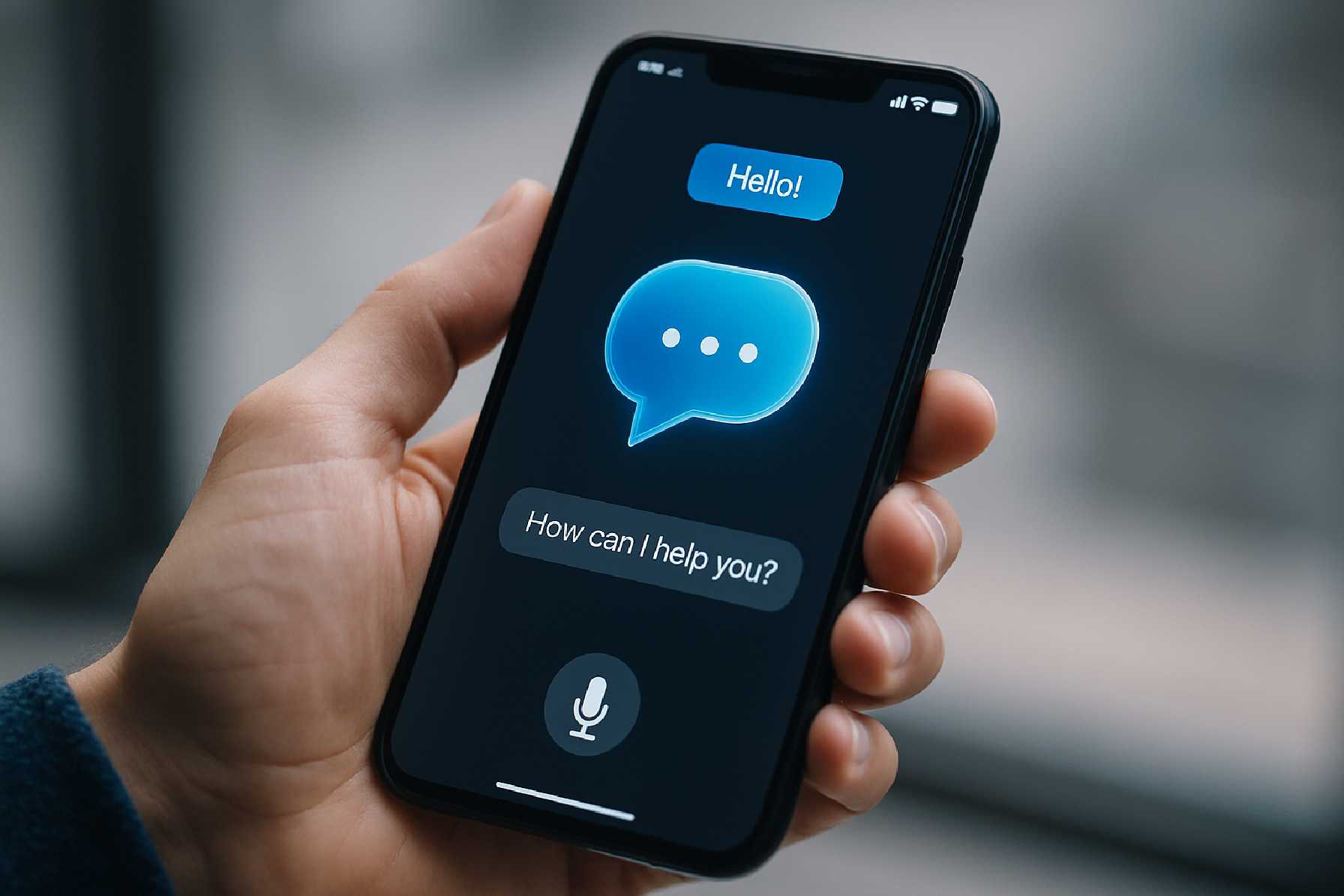
The Future of Conversational Interfaces in Mobile App Development
For years, conversational interfaces in mobile apps were treated as a narrow feature set: a support chatbot in the corner, a voice assistant for simple commands, a scripted flow that could answer basic questions and little more. That picture is changing quickly. As speech recognition improves, large language models become more capable, and users grow more comfortable interacting through natural language, conversation is moving closer to the center of mobile app development.
The shift matters because mobile apps are no longer judged only by how many features they offer. They are judged by how efficiently they help users get something done. In many cases, typing or speaking a request can feel faster and more intuitive than navigating menus, filters, and forms. That does not mean conversational design will replace graphical interfaces. More often, it will sit alongside them, acting as a flexible layer between the user and the app’s core functions.
For product teams, this creates both an opportunity and a design challenge. Conversational interfaces can improve onboarding, customer support, search, shopping, health tracking, travel planning, and workplace productivity. But they also introduce new questions about accuracy, privacy, moderation, accessibility, performance, and cost. The future of conversational interfaces in mobile application development will depend less on novelty than on whether teams can use them responsibly and well.
Why conversation is becoming a serious product interface
One reason conversational interfaces are gaining ground is simple: mobile screens are small, while user intent is often complex. A user may not want to tap through five screens to rebook a flight, compare insurance options, or find a specific transaction in a banking app. A conversational layer can reduce friction by letting the user express a goal directly.
This is not a theoretical trend. Apple, Google, and OpenAI have all pushed natural-language interaction further into mainstream consumer technology, even if their approaches differ. Apple’s app ecosystem has long emphasized accessibility, voice interaction, and privacy controls. Google has invested heavily in speech recognition and AI services across Android. At the same time, the growing use of generative AI has raised user expectations that software should understand intent, not just keywords.
Research also supports the broader movement toward messaging and conversational behavior. According to DataReportal’s global digital reports, messaging apps remain among the most widely used mobile services in the world. That does not automatically mean users want every app to become a chat window. It does suggest, however, that text-based interaction is familiar, habitual, and often more natural than developers once assumed.
In practical terms, conversational interfaces are becoming a serious part of mobile software development because they can reduce cognitive load. Instead of forcing users to learn the product’s structure, the app adapts more closely to the user’s language. When that works, it feels efficient. When it fails, it feels frustrating very quickly.
From chatbots to task completion
The first generation of mobile chatbots was often too rigid to be genuinely useful. Many were essentially decision trees disguised as conversation. They worked well for highly repetitive tasks, such as checking an order status, but struggled the moment a user phrased a request differently or asked a follow-up question.
The next phase is more ambitious. Modern conversational interfaces are increasingly expected to support task completion, not just customer deflection. In a retail app, that might mean helping a user refine a purchase based on budget, size, and delivery date. In a fitness app, it could mean interpreting a plain-language goal such as “help me train for a 10K without aggravating my knee.” In a travel app, it may involve comparing routes, policy rules, and calendar constraints in one exchange.
This is where mobile app developers need to think beyond the chatbot label. A successful conversational feature is not simply a model connected to a message box. It is a product capability that depends on structured data, clear permissions, reliable backend integrations, and carefully designed fallback paths.
That is also why many companies are cautious. A conversational interface that gives the wrong answer about a medical issue, financial product, refund policy, or legal requirement can create real risk. In high-stakes categories, teams often need a narrower, more controlled system rather than an open-ended assistant.
The user experience question: when conversation helps, and when it does not
The most important design question is not whether a conversational interface is technically possible. It is whether conversation is the best interaction model for the task.
Some activities are naturally conversational. Asking for help, refining preferences, summarizing information, or exploring unfamiliar choices are good examples. A user who does not know where a setting lives may benefit from asking, “How do I export my invoices from last quarter?” A user shopping for a laptop or comparing subscription plans may appreciate guided explanation instead of a dense filter panel.
Other activities are better served by standard mobile app design. If a user wants to transfer money between saved accounts, approve a delivery, or turn push notifications on or off, a visible button may be faster, safer, and more understandable than a chat exchange. For repeated actions, direct manipulation usually wins.
This hybrid future is likely to define the category. The best mobile application development teams will not treat conversational interfaces as replacements for established interface patterns. They will use them where natural language reduces friction and retain conventional UI where precision, speed, and confidence matter most.
That balance also supports accessibility. Voice and text interfaces can be valuable for users with visual, motor, or cognitive challenges, especially when they work well with screen readers and platform accessibility features. But accessibility is not automatic. Poorly labeled controls, unclear conversation history, and voice-only assumptions can exclude users just as easily as they can help them.
What the technology stack really looks like
From the outside, conversational experiences can look simple. Behind the scenes, they rarely are. A useful mobile conversational system usually combines several layers: speech-to-text for voice input, natural-language understanding or language model processing, business logic, app data access, and a user interface that can handle ambiguity without becoming confusing.
In some cases, a rules-based approach is still the right answer. It offers predictability, easier testing, and lower risk. In others, machine learning or large language models provide the flexibility users now expect. Increasingly, products combine both. The model interprets the request, while deterministic systems handle validation, transactions, and policy-sensitive actions.
For example, a banking app might use conversational AI to understand a question such as “Why is my balance lower than yesterday?” but rely on controlled internal services to retrieve account history, classify transactions, and present an explanation. The model can help frame the interaction, but it should not be the sole decision-maker for sensitive operations.
That distinction matters for mobile product development. It affects architecture, testing, compliance, analytics, and maintenance. Teams need to know which part of the system is generating language, which part is executing actions, and which part is accountable when something goes wrong.
iOS, Android, and the realities of platform strategy
Conversational interfaces are often discussed as if they exist above platform concerns. In practice, iOS app development and Android app development can involve different constraints and opportunities.
On iOS, developers need to align with Apple’s Human Interface Guidelines, privacy expectations, and permission flows, especially for microphone access, notifications, and background behavior. On Android, teams face a broader device landscape and may need to account for wider variation in hardware quality, voice input behavior, and OEM-level differences.
Cross-platform app development can make sense when the conversational layer is largely cloud-driven and the product team wants feature parity across systems. But trade-offs remain. Native development may provide tighter integration with device-level speech services, accessibility behavior, and performance tuning. Cross-platform frameworks can accelerate delivery and reduce duplication, yet they may require additional work when the app depends heavily on platform-specific interaction patterns.
There is no universal answer. The right decision depends on how central conversation is to the product, how deeply it needs to integrate with device features, and how much control the team needs over performance and interface behavior.
For organizations evaluating partners for mobile app development, this is one of the practical areas to probe. A conversational roadmap is not only about AI capability. It is also about mobile architecture, platform expertise, analytics instrumentation, and long-term operational support.
Accuracy, trust, and the cost of getting it wrong
The excitement around conversational AI has created a dangerous temptation: to assume fluent language equals reliable output. It does not. A conversational interface can sound confident while being incorrect, incomplete, or poorly grounded in the app’s actual data.
That is why trust will define the future of this category as much as intelligence. In mobile apps, trust is built through boundaries. Users need to know what the assistant can do, where answers come from, when uncertainty exists, and how to recover if the system fails.
Good conversational design often includes visible confirmations, suggested actions, structured answer cards, source attribution where appropriate, and escalation paths to human support. In regulated sectors, those controls are not optional extras. They are part of responsible product design.
There are also privacy and legal considerations. Mobile apps that collect voice data, process personal information, or profile user behavior may need to comply with rules such as the GDPR in Europe, the CCPA in California, and sector-specific obligations depending on the industry. App Store and Google Play policies also matter, particularly around permissions, data collection disclosures, and misleading claims.
For teams, this means conversational features should be reviewed not only by design and engineering, but also by security, legal, and support operations. The app development process becomes broader because the risks are broader.
Performance, cost, and scalability are still product questions
Conversational interfaces can feel lightweight to the user, but they may be expensive and operationally complex behind the scenes. Cloud inference costs, latency, logging, content moderation, multilingual support, and integration maintenance can all affect app development cost and long-term operating expense.
A simple scripted assistant may be relatively cheap to run, but limited in value. A more capable AI-driven assistant may improve engagement or deflect support volume, yet introduce ongoing usage costs and stricter monitoring requirements. The business case depends on what the feature actually improves: conversion, retention, support efficiency, onboarding speed, or user satisfaction.
Scalability is not only about server capacity. It is also about product governance. If a conversational system handles millions of user requests, the team needs a way to measure answer quality, failure modes, abandonment, escalation rates, and the difference between successful and merely plausible conversations.
This is where analytics become especially important. Traditional app analytics often track taps, screens, and funnels. Conversational products also need metrics such as intent resolution, turn count, fallback frequency, user correction patterns, and handoff rates. Without that instrumentation, teams may not know whether users are being helped or simply trapped in polished confusion.
Where conversational interfaces are likely to grow fastest
Not every app category will adopt conversational interfaces at the same pace. The strongest near-term use cases are likely to be in areas where users need explanation, discovery, or guided decision-making.
Retail is an obvious example. A shopper can describe what they want in everyday language and receive recommendations shaped by product data, inventory, and past behavior. Travel is another. Planning often involves multiple variables, making conversation more useful than static search alone.
Healthcare and wellness may also expand carefully, though with stricter guardrails. Administrative support, appointment navigation, medication reminders, and symptom triage are different from diagnosis, and product teams need to be very clear about those boundaries. Financial services, too, may use conversation for education and support long before fully automating sensitive decisions.
Enterprise mobile tools are another significant area. Employees often need to find policies, retrieve internal data, file requests, or summarize activity quickly. In those environments, conversational interfaces can reduce training needs and surface information from complex systems. But they also depend heavily on permissions, auditability, and secure integration.
The design discipline will mature
One of the clearest signs of the future is that conversational UX is becoming a discipline rather than a novelty. Teams are learning that tone alone is not enough. They need conversation architecture, prompt design, failure planning, domain constraints, moderation logic, and interface patterns that help users understand what the system is doing.
That maturation will likely reshape how mobile app developers work together. Designers, backend engineers, data specialists, QA teams, and product managers will need tighter collaboration. Testing will become more scenario-based and less dependent on fixed UI states. Content teams will also play a larger role, because wording affects trust, clarity, and user behavior directly.
In that sense, the future of conversational interfaces is not just about better models. It is about better product discipline.
What product teams should do now
For companies considering conversational features, the practical first step is not to ask, “How do we add AI to the app?” It is to ask where users currently experience friction that natural-language interaction could genuinely reduce.
If the answer is support volume, then a narrow and well-governed assistant may be enough. If the answer is complex product discovery, the team may need richer data modeling and recommendation logic. If the answer is accessibility or hands-free use, voice interaction quality and device integration become more important than generative flair.
Product teams should also prototype carefully. A lightweight pilot can reveal whether users want a conversational option at all, what they expect it to handle, and where confusion appears. That is often more valuable than making broad assumptions based on market hype.
The future belongs less to apps that add conversation everywhere than to apps that use it precisely.
Summary of the main considerations
| Issue | Why It Matters | Practical Consideration |
|---|---|---|
| User experience fit | Conversation helps some tasks but slows others | Use it for discovery, guidance, and support; keep direct UI for fast, repeatable actions |
| Technology choice | Rules-based and AI-driven systems solve different problems | Combine flexible language understanding with controlled business logic where risk is high |
| Platform strategy | iOS, Android, and cross-platform tools have different strengths | Match the approach to device integration needs, performance goals, and team capabilities |
| Trust and compliance | Incorrect or opaque answers can damage users and brands | Set clear boundaries, confirm actions, and review privacy and policy obligations early |
| Cost and operations | Conversational features can add ongoing infrastructure and monitoring costs | Model not just launch cost, but also inference, moderation, analytics, and maintenance |
| Analytics and improvement | Teams need evidence that the feature works | Track resolution quality, fallbacks, handoffs, and user corrections, not only engagement |
Questions readers should ask before building conversational features
Before adding a conversational layer to a mobile product, teams should pause and ask a few direct questions:
- Which user tasks in our app are genuinely easier through conversation than through standard navigation or forms?
- What level of accuracy and explainability do we need, especially if the app touches finance, health, travel, or other sensitive decisions?
- Do we need native iOS app development or Android app development advantages for voice, accessibility, or performance, or will a cross-platform approach be sufficient?
- How will we measure success beyond novelty, including task completion, support reduction, retention, or user satisfaction?
- What ongoing operational budget and governance model are required to maintain quality, privacy, and compliance after launch?
The likely future: not chat everywhere, but conversation where it counts
The future of conversational interfaces in mobile apps is unlikely to be a world where every interaction becomes a chat thread. That is the simplistic version of the story. The more credible future is one in which conversation becomes a selective but powerful layer in mobile app design.
In some products, it will remain a secondary support feature. In others, it will become a core interface for discovery, planning, coaching, and task orchestration. The difference will come down to product fit, data quality, trust design, and operational discipline.
For teams involved in mobile app development, the message is clear. Conversational interfaces are no longer experimental in the abstract. They are becoming a real product decision with strategic consequences. The companies that benefit most will not be the ones that adopt the trend fastest. They will be the ones that understand where conversation creates value, where it introduces risk, and how to design for both realities at once.