
 KO
KO  IT
IT  DE
DE  FR
FR  PL
PL  EN
EN 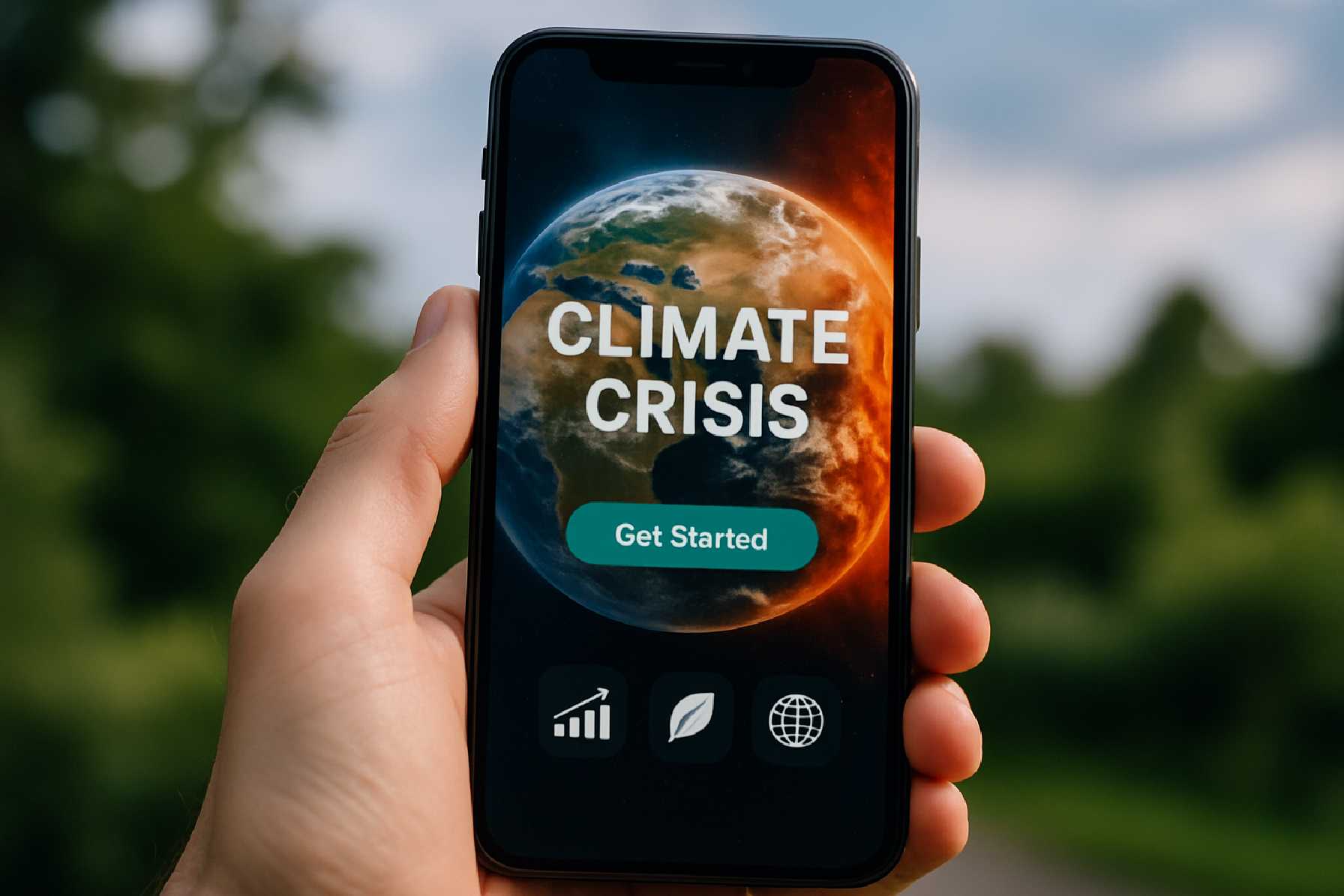
How Mobile App Development Is Being Used to Tackle the Climate Crisis
Climate change is often discussed in the language of policy, energy systems, and international agreements. But one of the more practical battlegrounds is far more personal: what ordinary people understand, believe, and do. That is the premise behind Climate Literacy 101, a new app designed to make climate education more accessible through mobile devices.
Its arrival reflects a wider shift in mobile app development: apps are no longer limited to convenience, commerce, or entertainment. Increasingly, they are being used to explain complex public-interest issues, translate data into everyday decisions, and guide behavior in measurable ways.
Climate Literacy 101 does not claim to solve the climate crisis. What it attempts to address is narrower and, in some ways, foundational: the gap between climate science and public understanding. In a market crowded with productivity tools and lifestyle platforms, that is a serious design and product challenge.
Why Climate Literacy Has Become a Product Problem
The need for better climate education is well documented. The source text cites a Pew Research Center survey showing that only 23% of Americans feel confident in their understanding of climate change. Even allowing for differences between confidence and actual knowledge, the signal is clear: many people are being asked to form opinions and make decisions about an issue they do not feel equipped to understand.
That gap matters because climate action is not only institutional. It also depends on public support, consumer choices, local participation, and an ability to separate evidence from misinformation. A person does not need to become a climate scientist, but they do need enough context to interpret headlines, evaluate claims, and understand the consequences of everyday habits.
For digital product teams, this creates a familiar challenge. How do you turn a dense, technical subject into something that is accurate, engaging, and usable on a phone screen? This is where climate education becomes a product design problem as much as a scientific one.
What Climate Literacy 101 Is Trying to Do
According to the source material, Climate Literacy 101 combines several common educational app features into a single product experience: quizzes, videos, real-time data visualizations, a carbon footprint calculator, and a community forum. None of these elements is novel on its own. The value lies in how they are combined to lower the barrier to learning.
The app’s approach suggests an important principle in mobile application development: users rarely absorb difficult information through one format alone. Some people respond to short video explanations. Others need interactive questions to test what they have understood. Data visualizations can make abstract trends, such as rising temperatures or emissions patterns, easier to grasp than paragraphs of text.
The carbon footprint calculator is especially notable because it shifts the experience from passive learning to personal interpretation. That matters in climate communication. A user who sees a concept explained in general terms may remain detached from it. A user who estimates their own emissions begins to connect information with behavior.
The community component adds another layer. In theory, forums can help sustain motivation by turning learning into participation. In practice, they also introduce moderation, safety, and content quality challenges. For any team building educational products around emotionally charged public issues, community features can strengthen engagement, but they also increase operational complexity.
Why These Features Matter in Mobile App Design
From a product strategy perspective, Climate Literacy 101 follows a pattern that many mobile software development teams now use in education: combine short learning loops with practical feedback. The logic is simple. A user is more likely to return if the app offers small moments of progress rather than one long lesson that feels like homework.
Interactive quizzes are a good example. In educational apps, quizzes do more than assess knowledge. They create rhythm, show progress, and support memory through retrieval practice. That is one reason they remain so common across language learning, test preparation, and professional training apps.
Videos can also be effective, especially for climate topics that involve systems thinking, time scales, and scientific processes that are difficult to explain through text alone. But in mobile app design, video is not automatically a strength. It increases production cost, requires careful scripting, and can create accessibility issues if captions, pacing, and alternative formats are ignored.
Data visualization is even more sensitive. On paper, real-time climate data sounds compelling. In execution, it can either clarify or confuse. Good visualizations reduce complexity without distorting meaning. Poor ones overwhelm users with charts they cannot interpret. This is where experienced mobile app developers and content specialists need to work closely together. Scientific accuracy and interface clarity have to be developed together, not separately.
The Link Between Climate Knowledge and Action
The source text also points to a broader argument: climate literacy is associated with behavior change. It references research published in the Journal of Environmental Psychology reporting that individuals with higher climate literacy were 2.5 times more likely to take steps to reduce their carbon footprint, including using public transportation or adopting renewable energy options.
That does not mean knowledge alone guarantees action. Behavior is shaped by cost, convenience, infrastructure, politics, and social norms. A person may understand climate risks perfectly and still have limited transportation choices or no control over their building’s energy system.
Still, the relationship between understanding and action matters. Educational apps are most useful when they acknowledge this distinction. Their job is not to promise transformation. It is to increase clarity, reduce confusion, and make next steps easier to recognize.
In that sense, Climate Literacy 101 appears to be built around a realistic objective. It is not replacing legislation, public transit networks, or energy policy. It is trying to make users more informed, and therefore more capable of making sense of the choices available to them.
Gamification Can Help, but It Is Not a Shortcut
The app reportedly uses gamification, rewarding users for completing activities. In digital product terms, this is a familiar tactic: points, badges, streaks, and small incentives can encourage repeat use, particularly in learning environments where motivation tends to fade over time.
The source material cites a Bunchball study suggesting that gamification can significantly increase engagement in educational apps. That aligns with broader industry experience, though the effect of gamification varies widely depending on execution. Rewards can increase participation, but they can also become superficial if the underlying content is weak.
For a climate education app, this trade-off is especially important. If the reward system feels too playful, the subject may lose seriousness. If it feels too rigid or moralizing, users may disengage. Good gamification supports learning by making progress visible. Bad gamification distracts from the educational purpose or turns complex issues into performance theater.
This is one of the less discussed realities of mobile product development for mission-driven apps: the emotional tone has to be calibrated carefully. Climate content can easily trigger anxiety, guilt, skepticism, or fatigue. Design choices need to support curiosity and agency rather than panic or shame.
What It Takes to Build an App Like This Well
From a development standpoint, a climate education app may look straightforward compared with a banking platform or telehealth product. But the complexity is still real. Success depends on much more than screens and content blocks.
First, there is the question of platform choice. A team building for both iOS app development and Android app development needs to decide whether native or cross-platform app development makes more sense. Native development can offer tighter performance control and deeper platform-specific optimization. Cross-platform approaches can reduce duplicated work and speed up iteration when budgets are constrained. Neither is universally better. The right choice depends on content complexity, animation requirements, device support goals, and long-term maintenance plans.
Second, there is the issue of data. If the product includes real-time visualizations, teams need reliable data sources, clear update logic, and transparent handling of changes. If it includes user-generated content in forums, the architecture must support moderation workflows and reporting mechanisms. If it calculates personal carbon impact, the methodology needs to be understandable and consistently applied.
Third, accessibility cannot be treated as optional. A climate education product is explicitly trying to broaden understanding, so excluding users through poor contrast, inaccessible charts, missing captions, or confusing navigation would undermine the mission. In practical terms, accessible mobile app design usually means paying attention to readable typography, screen reader compatibility, sufficient color contrast, captioned media, and interaction patterns that work for more than one type of user.
Fourth, trust is central. Educational apps dealing with science need to make information sourcing, updates, and expert review processes clear. This does not require turning the interface into an academic journal, but it does require discipline. Users should be able to tell when they are looking at established information, interpretive guidance, or community discussion.
Business Reality: Educational Apps Still Need a Sustainable Model
There is also a business side to the story. The source text notes that the global educational apps market is projected to reach $350 billion by 2025, citing Research and Markets. Whatever one makes of market forecasts, the direction is clear: mobile learning is no longer niche.
That growth does not automatically make every educational product viable. Climate-focused apps face a familiar tension in digital product management. The social mission may be clear, but monetization, retention, and long-term maintenance are harder to solve. If the app is free, who funds content updates, moderation, analytics, and technical support? If it is paid, what value proposition justifies the purchase when so much climate content is already available online?
These are not reasons to dismiss the model. They are reasons to evaluate it seriously. Custom mobile app development for public-interest education often succeeds when stakeholders are explicit about goals. Is the product trying to maximize reach, demonstrate impact for funders, support schools, build a community, or influence behavior in a specific audience? Different goals lead to different product decisions.
Where App Strategy Meets Public Trust
Climate apps operate in an environment where trust is fragile. Users are exposed to conflicting claims, politicized narratives, and endless streams of content competing for attention. In that context, a credible educational app must do two things at once: simplify information without oversimplifying the science.
That is harder than it sounds. It requires editorial discipline, good user research, and a product team willing to test whether users actually understand what they see. In many app categories, mild confusion is survivable. In science education, it can defeat the purpose of the product.
This is also why analytics should be interpreted carefully. A long session time does not necessarily mean comprehension. A completed quiz does not prove lasting understanding. Product teams need to distinguish between engagement metrics and learning outcomes. They are related, but they are not the same.
The Larger Meaning of Climate Literacy 101
What makes Climate Literacy 101 interesting is not only the topic. It is what the app represents in the evolution of mobile application development. For years, the most celebrated apps optimized speed, delivery, entertainment, and transactional ease. A climate education app points to a different ambition: using mobile products to improve civic and scientific understanding.
That ambition should be welcomed, but not romanticized. An app is still a tool, not a cure. It can support awareness, structure learning, and encourage reflection. It cannot by itself overcome political division, infrastructure limits, or the economic systems driving emissions.
Even so, tools matter. In a crisis shaped partly by information gaps and public disengagement, a well-designed educational app can play a meaningful role. It can turn passive concern into informed attention. It can help users move from vague anxiety to clearer understanding. And that, while modest compared with the scale of the climate crisis, is not trivial.
What Product Teams Can Learn From This App
For readers in mobile product development, Climate Literacy 101 offers several useful lessons. First, socially important apps still need strong product fundamentals. Good intentions cannot compensate for weak usability, unclear content structure, or poor retention design.
Second, educational experiences on mobile work best when they mix formats thoughtfully. Quizzes, video, data visualization, and calculators can reinforce one another, but only when each serves a clear user need.
Third, topic authority is part of the product. In climate education, content credibility is not a side issue delegated to marketing copy. It is core functionality.
Finally, mission-driven apps should be judged not only by downloads, but by whether they reduce friction between information and action. That is where climate education products can justify their place in the market.
Summary Table: Core Considerations Behind a Climate Education App
| Issue | Why It Matters | Main Trade-Off or Risk |
|---|---|---|
| Climate literacy gap | Low public confidence in understanding climate change weakens informed decision-making | Education alone does not guarantee behavior change |
| Interactive learning features | Quizzes, videos, and calculators can make complex topics easier to grasp | Too many features can create clutter rather than clarity |
| Real-time data visualization | Turns abstract climate trends into something more concrete and understandable | Poor visualization can confuse users or oversimplify science |
| Gamification | Can improve engagement and repeat usage in educational products | Rewards may feel superficial or distract from learning |
| Community features | Can build motivation, discussion, and peer learning | Requires moderation, safety controls, and content governance |
| Platform strategy | Native and cross-platform choices affect cost, performance, and maintenance | No single development approach fits every product need |
| Trust and accessibility | Essential for credibility, inclusion, and long-term adoption | Weak sourcing or inaccessible design undermines the mission |
Questions Readers Should Ask Before Building or Evaluating a Climate Education App
Before investing in a climate-focused digital product, teams and stakeholders should ask themselves a few practical questions:
- Is the app’s primary goal to inform, change behavior, support a curriculum, build community, or demonstrate social impact?
- Which features genuinely improve understanding, and which ones are likely to add complexity without improving learning outcomes?
- How will the team verify content accuracy, explain data sources, and update scientific information over time?
- Would native iOS and Android builds offer meaningful advantages for this product, or would cross-platform app development be sufficient?
- How will success be measured beyond downloads and session time, especially if the product claims educational value?
A Small App With a Serious Ambition
Climate Literacy 101 enters the market with a focused but important promise: make climate knowledge more accessible, more engaging, and more actionable through a mobile experience. That is a narrower promise than “solving” climate change, and it is a more credible one.
If the app succeeds, it will not be because climate has become a trendy app category. It will be because the product manages a difficult balance that many educational tools fail to achieve. It will need to be scientifically grounded without becoming unreadable, motivating without becoming manipulative, and practical without pretending that individual behavior alone can resolve a systemic crisis.
For the mobile app development industry, that is the larger lesson. Some of the most meaningful apps are not those that save a few seconds in a shopping flow, but those that help users understand the world more clearly. In the case of climate change, clarity is not a luxury. It is part of the infrastructure of action.