
 KO
KO  IT
IT  DE
DE  FR
FR  PL
PL  EN
EN 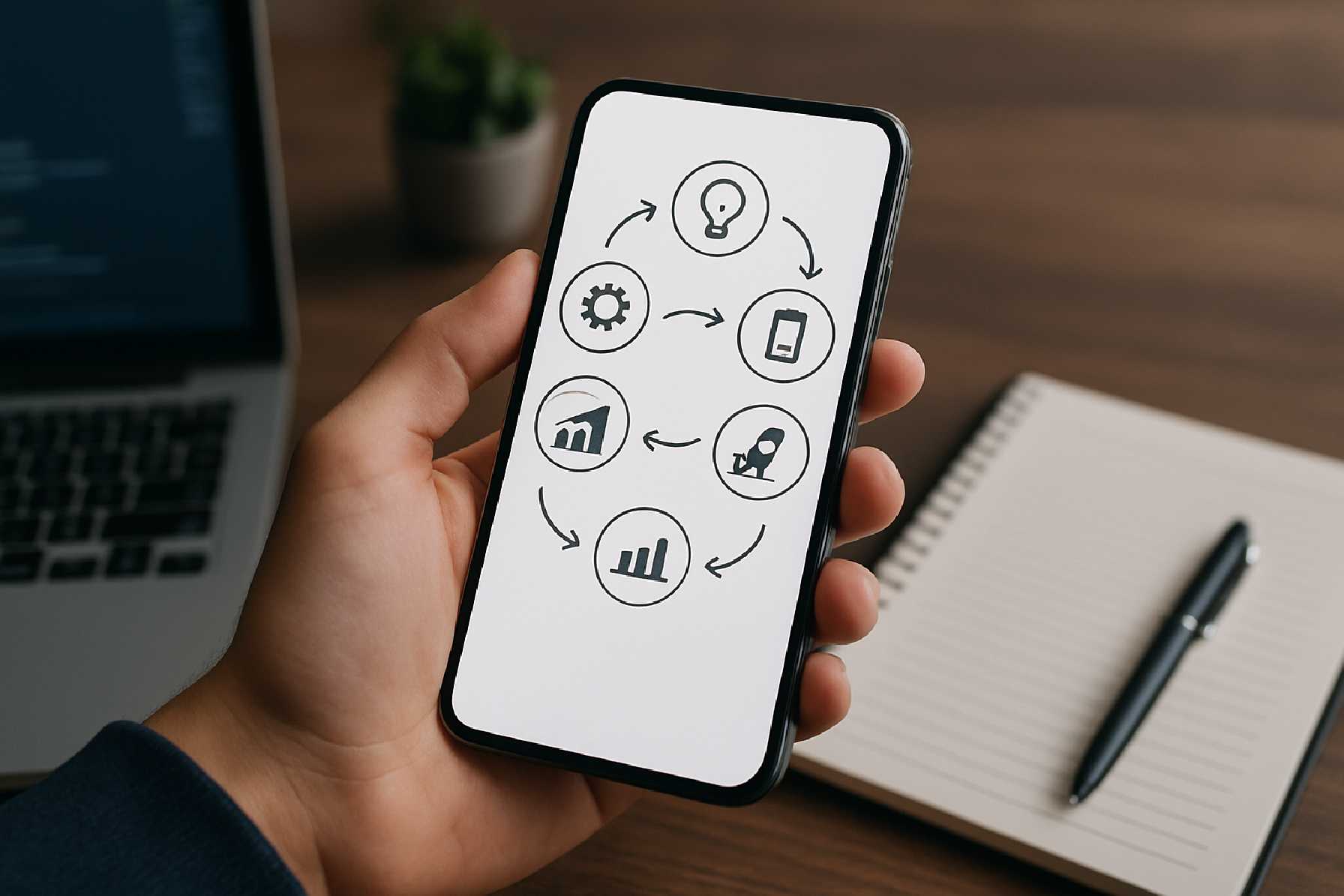
Mobile App Development Lifecycle: A Practical Guide to Building, Launching, and Improving Better Apps
Mobile app development is no longer a niche concern reserved for large consumer brands or venture-backed startups. For retailers, restaurants, financial services firms, healthcare providers, logistics operators, and software companies alike, the mobile channel has become a core part of the customer experience. In many sectors, it is the experience.
That shift has turned the mobile app development lifecycle into a business discipline as much as a technical one. Building a successful app is not just a matter of writing code and submitting it to an app store. It requires clear goals, disciplined product decisions, careful design, robust engineering, testing across devices and operating systems, and a long-term maintenance plan that can keep pace with changing user expectations and platform rules.
For companies exploring mobile app development, the central challenge is rarely whether an app can be built. The harder question is whether it can be built in a way that solves a real problem, fits the organization’s capabilities, and remains useful after launch.
The scale of the opportunity helps explain why this matters. App Annie’s State of Mobile 2024 report projected the global mobile app market at $268.8 billion by 2025. The source text also points to IDC research from 2022 indicating that the mobile app market serving small and medium-sized businesses could reach $144 billion by 2025. Even allowing for the usual caution around market forecasts, the direction is clear: mobile products are a major commercial channel, including for companies well beyond the traditional technology sector.
Why the Mobile App Development Lifecycle Matters
The phrase “lifecycle” can sound procedural, but it captures something important. Apps do not move in a straight line from idea to completion. They evolve. A launch version is only one stage in a longer product journey shaped by user feedback, analytics, operating system updates, security fixes, and changing business needs.
That is why experienced mobile product teams usually treat app development as a sequence of connected decisions. Each stage affects the next. Weak planning often leads to feature bloat. Poor design increases support costs and lowers retention. Rushed development creates technical debt. Inadequate testing can damage ratings and trust within days of release. Neglect after launch can make even a promising product fade quickly.
Understanding the app development process helps non-technical stakeholders as well. Product managers, founders, marketers, and operations leaders are often asked to make choices about scope, platform priorities, budgets, timelines, compliance, and vendor selection. They do not need to become engineers, but they do need a clear framework for evaluating trade-offs.
1. Planning: Defining the Problem Before Building the Product
The planning stage is where the economics of mobile software development are often decided. Teams that begin with a vague ambition to “have an app” usually struggle. Teams that define the specific customer problem, business goal, and success metrics are more likely to ship something that users actually adopt.
At this stage, a company typically identifies its target audience, studies competitor apps, maps user journeys, and decides which features belong in the first release. This is also when core business questions should be answered: Is the app meant to drive transactions, reduce support volume, improve loyalty, enable field operations, or create a new subscription product? The answer influences everything from architecture to analytics.
A useful planning outcome is not a giant requirements document. It is a focused roadmap. That roadmap should separate essential features from nice-to-have ideas and make clear what the first version must prove.
The Starbucks example from the source text illustrates this well. Its app strategy was not built around novelty. It focused on practical customer tasks such as ordering, payment, and convenience. That strategic clarity helped turn the app into a meaningful transaction channel, rather than a branding exercise.
For smaller businesses, the lesson is similar. A restaurant app may not need custom social features if the real friction point is repeat ordering. A service business may gain more from appointment management and notifications than from an elaborate content section. Good mobile product development begins by reducing ambiguity, not increasing ambition.
2. Design: Turning Requirements Into a Usable Experience
In mobile app design, aesthetics matter, but usability matters more. Users make judgments fast. If navigation is confusing, account creation feels invasive, or core actions take too many taps, adoption suffers. The source text cites a 2023 UX Matters survey reporting that 88% of users are less likely to return after a poor mobile app experience. Whether the exact number varies by context, the broader principle is well established across product design research: bad usability has a direct business cost.
Design typically begins with wireframes and prototypes. These help teams test structure before visual details are finalized. It is a cheaper place to discover that checkout is too long, onboarding asks for unnecessary permissions, or a dashboard overwhelms first-time users.
Good UX also means making product decisions that respect the realities of mobile use. People interact with phones while commuting, waiting in line, switching networks, and multitasking. Interfaces should therefore be concise, forgiving, and optimized for interruption. A field operations app may need offline support. A healthcare app may need larger text, clear consent flows, and accessible navigation. An e-commerce app may need to shorten the path between browsing and payment.
Accessibility belongs here too. It is often treated as an optional refinement, but in practice it is part of product quality. Readable contrast, proper labeling for screen readers, touch targets of reasonable size, and clear feedback states help many users, not only those with formal accessibility needs.
3. Development: Choosing the Right Technical Approach
This is the stage most people imagine when they think about mobile application development: engineering teams writing code, connecting services, building APIs, and implementing features. But one of the most consequential decisions arrives before much coding begins: what development approach best fits the product?
In broad terms, teams usually choose among native, cross-platform, hybrid, or web-based approaches. Native development means building separately for iOS app development and Android app development using platform-specific tools. This often provides the strongest access to device capabilities, the most platform-consistent performance, and the greatest flexibility for complex interactions. The trade-off is usually higher cost and more duplicated work across platforms.
Cross-platform app development, using frameworks such as Flutter or React Native, aims to share more code between iOS and Android while still delivering app-store-ready mobile apps. The source text notes a 2024 Stack Overflow survey finding that 68% of developers prefer cross-platform solutions for faster time-to-market and cost efficiency. That preference reflects a practical reality: many products do not need fully separate codebases, especially when budgets are constrained and feature parity across platforms matters.
Still, cross-platform is not automatically the best choice. Some apps require advanced platform-specific optimization, heavy graphics processing, deep hardware integration, or very customized interface behavior. In those cases, native development may justify the extra investment.
Hybrid and web-based approaches can also be useful, especially for simpler internal tools or content-heavy products, but they may bring limitations in performance, offline capability, or access to native features compared with a fully engineered mobile app.
Development also includes backend decisions. Many apps rely on user authentication, cloud databases, payment systems, analytics tools, push notifications, mapping services, or third-party business systems. These integrations increase product value, but they also increase complexity. Every external dependency can affect reliability, security, and maintenance.
This is one reason app development cost varies so widely. There is no fixed industry price or universal timeline. A lightweight customer utility app is different from a regulated financial product, a marketplace with real-time logistics, or a healthcare application managing sensitive data. Scope, integrations, security needs, design quality, test coverage, and post-launch support all shape both cost and delivery time.
4. Testing: Protecting Quality Before Users Discover the Problems
Testing is where many app projects reveal their true maturity. A polished demo can hide weak edge-case handling, inconsistent behavior across devices, poor network recovery, or vulnerabilities in authentication and data handling. Users, however, will find those issues quickly.
A disciplined testing phase usually includes functional testing, performance testing, security review, and user acceptance testing. Functional testing checks whether features behave as intended. Performance testing evaluates responsiveness, load behavior, startup time, and stability. Security testing looks for weaknesses in authentication, data transmission, storage, and access control. User acceptance testing verifies that the app works for real business workflows, not just ideal technical scenarios.
Automation can improve this stage significantly. The source text cites a 2023 Sauce Labs report showing that companies using automated testing reduced time-to-market by 37%. Automated tests are especially valuable for regression checking, where teams need to confirm that a new release did not break existing functionality. They do not replace human testing, but they reduce repetitive manual effort and make frequent updates more manageable.
Device diversity remains a major challenge, particularly on Android. Screen sizes, hardware capabilities, and operating system versions vary widely. Even on iOS, teams still need to account for different screen resolutions, permissions behavior, and system-level changes introduced in new releases. Real-world testing conditions matter too. An app that works perfectly on office Wi-Fi may perform very differently on a congested mobile network.
5. Deployment: Launching Is a Process, Not a Button
Publishing an app involves more than submitting a build. App Store and Google Play distribution comes with review guidelines, content requirements, privacy disclosures, and technical standards. Teams need to prepare store listings, screenshots, descriptions, category selections, and release notes. These are not cosmetic details. They influence discoverability, approval, and conversion.
The source text references a 2024 Sensor Tower report stating that well-optimized listings can generate up to 250% more downloads. The core point is credible and widely observed: app store optimization matters. Clear copy, relevant keywords, strong visuals, and accurate positioning can improve visibility and increase the percentage of store visitors who install.
Many teams benefit from beta testing or a soft launch before a full rollout. This allows the product team to observe technical performance, support volume, onboarding friction, and early retention patterns in a smaller environment. For consumer apps, that can reduce reputational risk. For enterprise or operational apps, it can expose process issues before broader deployment.
Compliance also deserves attention. Privacy practices, consent handling, data collection disclosures, and platform permission usage should be aligned with both app store requirements and any sector-specific obligations that apply to the business. Security best practices and legal compliance are related, but they are not the same thing. Teams should avoid assuming that technical encryption or secure coding alone resolves broader policy obligations.
6. Maintenance: The Stage That Determines Whether an App Lasts
Launch day creates visibility, but maintenance creates durability. Operating systems change, devices evolve, APIs are deprecated, and user expectations shift quickly. Apps that are not maintained begin to degrade, sometimes quietly at first and then all at once.
The source text cites a 2023 Gartner report suggesting that apps updated monthly retain users three times longer than apps updated less frequently. Even without treating that ratio as universal, the principle is persuasive: active maintenance usually correlates with better retention because it improves stability, responds to feedback, and signals product commitment.
Maintenance includes bug fixing, performance tuning, security patches, compatibility updates, feature enhancements, and analytics review. It also includes deciding what not to build. User feedback can be valuable, but not every request aligns with the product’s strategy. Good post-launch management means distinguishing recurring friction from isolated preference.
This stage is also where mobile app developers and product managers learn whether the original assumptions were correct. Are users completing onboarding? Are they returning after seven days? Which features drive retention? Where do crashes occur? Which devices generate the most support complaints? Metrics turn maintenance from reactive support into structured product improvement.
What SMB Success Stories Actually Show
The source text highlights Sweetgreen, Calm, and Square. They differ greatly in market, scale, and business model, but they share a useful pattern. None succeeded because they merely had an app. They succeeded because the app solved a repeatable user problem and kept improving over time.
Sweetgreen used mobile ordering and loyalty features to support a behavior customers already wanted: faster, easier food ordering. Calm expanded through user experience quality and continuous content updates, showing that content strategy and product design can reinforce one another. Square began with mobile payments for small businesses and grew by extending into adjacent workflows, a reminder that custom mobile app development often works best when it starts narrowly and expands from validated use cases.
These examples also caution against copying features out of context. What works for a restaurant chain may not work for a B2B service company. What succeeds in a subscription wellness product may not fit a transactional marketplace. The more useful lesson is strategic discipline, not feature imitation.
Where Mobile App Development Is Heading
Several trends are shaping the future of mobile software development. The source text points to AI and machine learning, 5G, augmented reality, and IoT integration. All are relevant, though their importance depends heavily on the product category.
AI can improve personalization, search relevance, support automation, or content recommendations, but it is not a shortcut to product-market fit. It works best when tied to a clear user problem and supported by reliable data. 5G can improve responsiveness and enable richer real-time experiences, but its benefits vary by geography, device support, and application design.
AR may create strong value in retail visualization, training, gaming, and industrial workflows, but it introduces design and device constraints. IoT integration can be powerful in smart home, health, logistics, and equipment monitoring contexts, yet it also increases operational complexity because the app becomes only one component of a larger connected system.
In other words, future-facing technologies can be meaningful advantages, but only when they serve a justified product case. Hype is not a strategy.
Summary of the Main Decisions in the Mobile App Development Lifecycle
| Lifecycle Stage | Main Focus | Key Decision or Risk | Practical Consideration |
|---|---|---|---|
| Planning | Business goals, users, scope | Building too much too early | Define the core user problem and success metrics for the first release |
| Design | UX, UI, accessibility, flows | Poor retention due to friction | Prototype key tasks and test usability before visual polish is finalized |
| Development | Architecture, frameworks, integrations | Choosing the wrong platform approach | Match native or cross-platform choices to product complexity and resources |
| Testing | Quality, performance, security | Releasing unstable or inconsistent builds | Combine automated regression testing with human testing on real devices |
| Deployment | Store submission, ASO, compliance | Approval delays or weak conversion in app stores | Prepare listings carefully and use beta or soft launch stages where relevant |
| Maintenance | Updates, analytics, support, optimization | Retention decline and technical decay | Treat launch as the start of continuous product improvement, not the end |
Questions Readers Should Ask Before Starting a Mobile App Project
Before committing budget, time, or internal resources, decision-makers should ask a few practical questions:
- What specific user problem will this app solve, and how will we know whether the first release is successful?
- Do we need separate native apps for iOS and Android, or would cross-platform app development meet our technical and business requirements?
- Which integrations, security needs, and compliance obligations could increase complexity beyond the initial feature list?
- How will we test the app across devices, network conditions, and real-world user scenarios before launch?
- Do we have a realistic plan for maintenance, analytics, updates, and product decisions after the app is published?
The Real Measure of Success
The mobile app development lifecycle is best understood not as a checklist, but as a discipline for reducing risk and improving product judgment. It helps teams decide what to build, how to build it, how to validate it, and how to keep it useful over time.
For businesses of any size, that discipline matters because mobile products now sit at the intersection of customer experience, software engineering, and commercial strategy. A well-executed app can improve engagement, increase convenience, strengthen loyalty, and open new revenue paths. A poorly executed one can do the opposite just as quickly.
The companies that tend to succeed are not those that move fastest at any cost. They are the ones that connect strategy, design, engineering, and ongoing iteration into a coherent process. In mobile app development, that is what the lifecycle is really for.