
 KO
KO  IT
IT  DE
DE  FR
FR  PL
PL  EN
EN 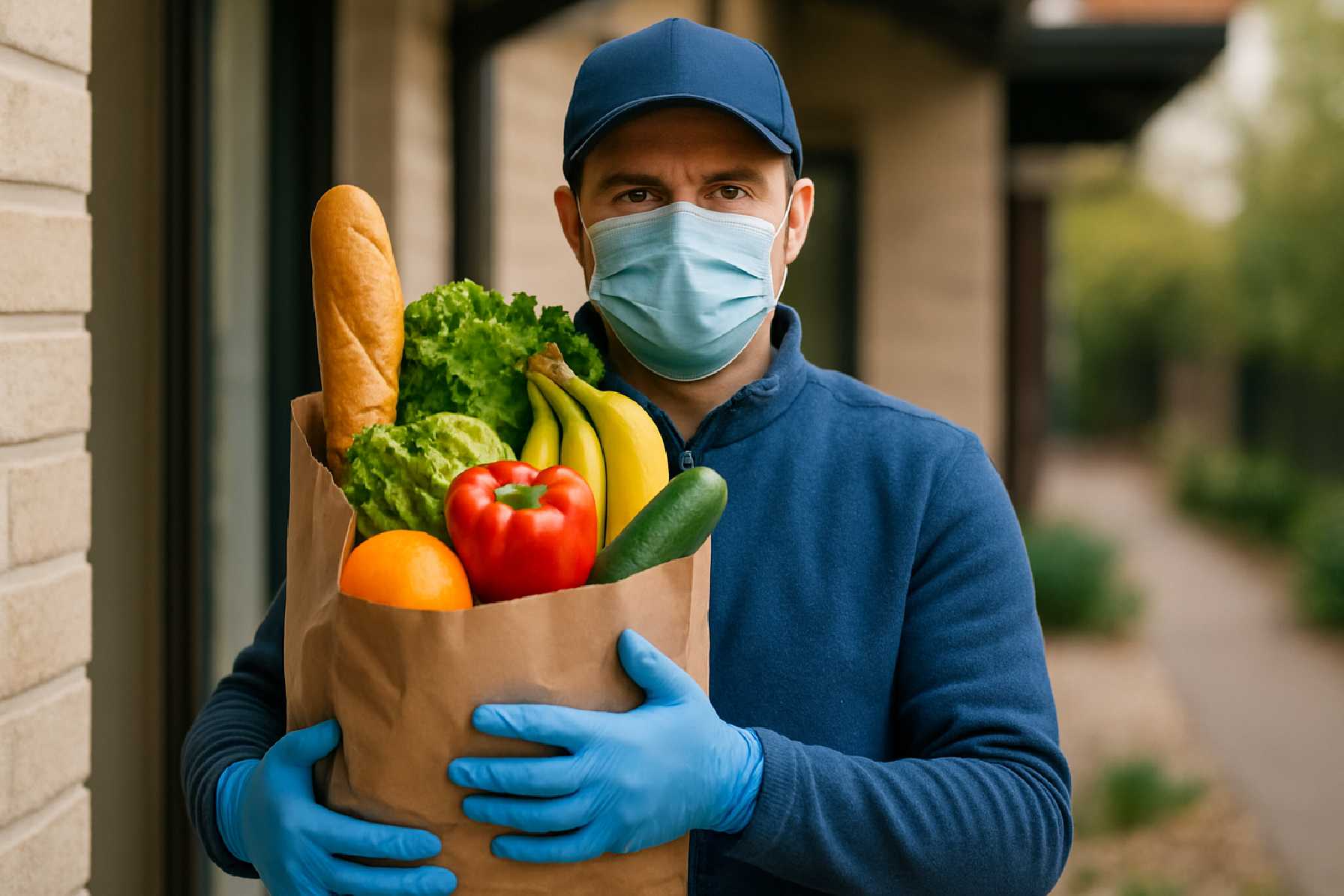
How COVID-19 Reshaped Grocery Ordering Apps and Accelerated Mobile App Development
When the COVID-19 pandemic disrupted daily life, grocery shopping changed almost overnight. A routine errand suddenly involved health concerns, supply uncertainty, and long waits outside stores. For millions of people, the fastest way to adapt was already in their pocket: the smartphone.
Food delivery and grocery ordering apps moved from convenience to necessity. Same-day delivery, curbside pickup, and contactless drop-off became essential services rather than optional features. In parallel, demand for reliable digital products pushed mobile app development into a new phase, one defined by scale, speed, trust, and operational resilience.
The shift was measurable. In the early months of the pandemic, App Annie reported a major global increase in downloads for same-day delivery and pickup apps, with growth reaching 60% worldwide. In the United States, DoorDash saw particularly sharp momentum, with downloads rising 200% during that period. Those numbers captured more than a spike in consumer interest. They reflected a structural change in how people bought food, household items, and everyday essentials.
This was not just a story about consumer behavior. It was also a case study in digital product management, mobile software development, and rapid service adaptation under pressure. The apps that performed best were not simply the ones with the biggest brand recognition. They were the ones that made ordering feel safe, understandable, and dependable at a time when very little else did.
Why Grocery and Delivery Apps Became Essential
Three forces drove the rise of grocery ordering apps during the pandemic, and together they created unusual pressure on product teams and operations managers.
First, public health guidance mattered. The U.S. Centers for Disease Control and Prevention emphasized distancing and limiting exposure in crowded environments. Grocery stores, once ordinary spaces, became places many people wanted to avoid, especially older adults, immunocompromised users, and families caring for vulnerable relatives.
Second, fear and uncertainty changed decision-making. During the first waves of the pandemic, many households prioritized predictability over price or brand loyalty. If an app could reserve a delivery slot, provide stock updates, and offer contactless delivery, that utility often outweighed minor differences in fees.
Third, convenience became operationally significant. Remote work, school closures, and care responsibilities compressed time and attention. Ordering groceries through an app was not merely easier; for many households it was the only realistic way to manage daily life.
From a mobile product development perspective, this combination created a difficult challenge. Apps had to support a surge in traffic while remaining clear enough for users who were placing orders under stress, often for the first time. In practical terms, that meant strong onboarding, stable payment flows, accurate order status updates, and responsive customer support.
The Most Visible Apps During the Pandemic
Several delivery platforms became especially prominent during this period, though they served somewhat different needs and markets.
Wolt, founded in Finland, gained attention for its streamlined interface and strong focus on contactless delivery. Its user experience helped reduce friction at key moments: browsing, confirming orders, and tracking delivery. That matters more than it sounds. In a crisis, simple interactions become a trust signal.
Meslula positioned itself around broad delivery utility, promising to bring users more than just restaurant meals. The appeal of an “anything delivered” model was clear during lockdowns, when households needed flexibility. An app that could bridge categories, from food to paper goods, aligned well with changing consumer expectations.
Ten Bis, already established in Israel, adapted quickly by strengthening contactless options and refining the experience around convenience. Features such as restaurant filtering, delivery-time visibility, and relevance-based recommendations became more valuable when users were trying to place orders quickly and avoid uncertainty.
Uber Eats also benefited from timing and scale. Its established logistics network and familiar interface helped it extend from restaurant delivery into broader local commerce in many markets. That did not remove operational complexity, but it gave the company a strong foundation during a period of extraordinary demand.
It is important to note a key distinction here: popularity during the pandemic did not always mean the same thing in every market. In some places, users preferred restaurant-first apps with grocery add-ons. In others, supermarket-led e-commerce and pickup services became more central. Large grocery chains such as Shufersal and Rami Levy expanded their digital ordering capabilities as demand for e-commerce and same-day pickup increased.
What Made These Apps Work: Product Features That Mattered
During the pandemic, users were not looking for novelty. They were looking for reassurance. That changed feature priorities across mobile application development teams.
Contactless delivery was one of the most visible examples. Technically, the feature sounds simple: let the courier leave the order at the door. In product terms, however, it touches multiple systems. The app needs clear delivery instructions, courier workflow support, customer notifications, and in some cases photo confirmation or location verification. A small feature on the surface can involve significant backend coordination.
Real-time availability also became critical. Inventory mismatches create frustration in normal conditions; during a crisis they can seriously damage trust. Grocery apps that could communicate substitutions, out-of-stock items, or expected delays more clearly were better positioned to retain users.
Another important capability was order tracking. This is not just a map interface. Good tracking reduces uncertainty by showing whether the order is being prepared, packed, dispatched, or delayed. For product teams, this requires close integration between merchant systems, logistics operations, and the consumer-facing app.
Payments mattered as well. A stable checkout process became essential because failed transactions often meant losing a hard-to-secure delivery slot. Here, mobile app design and engineering quality meet directly. The user may only see a spinning button or an error message, but underneath are issues of API reliability, payment gateway behavior, timeout management, and app performance.
How the Pandemic Changed Mobile App Development Priorities
The pandemic did not create digital commerce, but it compressed years of behavioral change into a short period. For teams involved in mobile app developers’ work, that changed priorities quickly.
Scalability moved to the center. An app that works well for steady daily demand can struggle when order volumes surge, especially during evening peaks or public restrictions. Development teams had to think beyond visual design and focus on architecture, cloud capacity, background job processing, and monitoring.
Reliability became a product feature in its own right. Users ordering groceries do not care whether a system uses microservices or monolithic architecture. They care whether the app crashes when they try to pay. This is where mobile software development becomes inseparable from operations. Logging, alerting, rollback procedures, and release discipline matter as much as feature velocity.
Accessibility also became more relevant. Some users who had rarely used digital ordering before the pandemic, including older adults, were suddenly relying on it. That increased the importance of readable text, intuitive navigation, clear status messaging, and compatibility with platform accessibility features on iOS and Android.
Analytics gained strategic importance too. Product teams needed to understand where users were abandoning orders, which screens were causing confusion, and how demand shifted by time, location, and category. Used responsibly, analytics can improve usability and operations. But they are not a substitute for good judgment, and they do not eliminate the need for privacy-conscious data practices.
Business Lessons for Grocery and Delivery Platforms
For businesses, the pandemic revealed a simple truth: digital channels are not just marketing assets. In a disruption, they become core infrastructure.
That changed how companies approached application development services. Retailers and delivery providers needed more than a basic consumer app. They needed integrated systems that could connect customer ordering, store operations, driver coordination, inventory management, and customer service.
Some brands responded by improving the end-to-end shopping flow. Others focused on personalization, using previous orders or broad preference patterns to simplify repeat purchases. This kind of feature can be helpful, but it should be described carefully. Recommendation systems are useful when they reduce effort and increase relevance. They are less useful when they become intrusive or when they obscure practical information such as substitutions, prices, and delivery windows.
Marketing also changed, though not always in the way people expected. During the peak of demand, the strongest growth often came less from creative advertising than from functional trust. Users wanted to know whether the service worked, whether delivery times were realistic, and whether they could depend on the app again next week.
Choosing the Right Development Approach for Delivery Apps
For product leaders and founders studying this market, one of the most practical questions is how to build and maintain this type of service. There is no single best answer.
Native iOS app development and Android app development can offer strong performance and closer integration with platform-specific capabilities such as notifications, location services, and accessibility tools. That can be important in delivery apps, where speed, responsiveness, and background behavior affect the user experience.
Cross-platform app development can make sense when teams need to move quickly across both platforms with shared code and consistent design patterns. The trade-off is that some experiences may require extra work to match the polish or behavior of a deeply optimized native implementation.
The right approach depends on business goals, team expertise, release expectations, and system complexity. A startup validating demand may prioritize speed and controlled scope. A larger retailer with complex logistics and loyalty systems may need a more customized architecture and long-term maintenance plan.
The same caution applies to app development cost. Cost varies significantly based on feature scope, integrations, security requirements, supported platforms, testing needs, and post-launch maintenance. There is no honest universal number for building a grocery or delivery app, especially one expected to perform reliably at scale.
Security, Compliance, and Store Readiness
Food delivery and grocery apps handle sensitive user information, including addresses, contact details, and payment-related data. That makes security a core requirement, not an optional enhancement.
In practical terms, best practices include secure authentication, careful permission handling, encrypted data transmission, and disciplined access control across internal systems. These are general engineering principles, not guarantees of formal compliance. Regulatory obligations depend on geography, business model, and the nature of the data collected.
There is also a platform dimension. Apps distributed through the App Store and Google Play must meet technical and policy expectations around performance, privacy disclosures, permissions, and user safety. Those requirements evolve, so product teams need an ongoing review process rather than a one-time launch checklist.
Maintenance is equally important. Grocery and delivery apps are living products. Menus change, stock conditions shift, courier workflows evolve, and user expectations rise. A strong launch without sustained maintenance usually leads to a weak product six months later.
What Stayed After Lockdowns Eased
As restrictions loosened, some in-store shopping returned. But the behavior shift did not disappear. Many users who started ordering groceries through apps during the pandemic continued to do so because the habit had been formed and the value proposition remained clear.
That persistence matters. It suggests the pandemic acted less as a temporary detour and more as an accelerator of existing trends in mobile product development and local commerce. Same-day pickup, scheduled delivery windows, digital loyalty, and hybrid shopping journeys are now standard expectations in many markets.
Future-facing ideas such as augmented reality shopping or blockchain-based traceability are often discussed in this context. Some may prove useful in specific cases, but they should not distract from the fundamentals. For most grocery and delivery products, the basics still determine success: accurate inventory, dependable logistics, understandable fees, stable performance, and a user experience that respects time and attention.
What Product Teams Should Take From This Shift
The pandemic offered a hard lesson in what users value when conditions are unstable. They value clarity over complexity, reliability over novelty, and transparency over aggressive growth tactics.
For companies planning custom mobile app development in this space, that means starting with operational reality. A polished interface cannot compensate for weak fulfillment systems. At the same time, strong logistics can still lose customers if the app makes ordering confusing or error-prone.
The best grocery ordering apps during COVID-19 succeeded because they connected two disciplines that are often treated separately: software execution and service execution. They worked not only as mobile products, but as dependable parts of everyday life.
Summary Table: Key Considerations for Grocery Ordering Apps
| Issue | Why It Mattered During COVID-19 | Practical Takeaway for Product Teams |
|---|---|---|
| Contactless delivery | Reduced perceived health risk and increased trust | Design the feature across the full workflow, not just the user-facing toggle |
| Scalability | Demand spikes stressed apps and backend systems | Plan for peak load, monitoring, and graceful failure handling |
| Inventory and substitutions | Out-of-stock items were common and highly frustrating | Communicate availability clearly and support substitution logic |
| Checkout reliability | Failed payments could mean losing delivery slots | Prioritize payment stability, error handling, and recovery flows |
| Accessibility and usability | Many first-time and older users depended on apps | Keep navigation simple, text readable, and status messages clear |
| Development approach | Teams needed to balance speed, quality, and maintenance | Choose native or cross-platform based on product needs, not fashion |
| Security and privacy | Apps processed personal and payment-related information | Apply strong security practices and review policy obligations continuously |
Questions Readers Should Ask Before Building or Upgrading a Grocery Delivery App
Before investing in a grocery ordering or delivery product, decision-makers should ask a few direct questions.
Are we solving a real operational problem, or just adding an app layer to a fulfillment process that is not ready?
Which features are essential for trust in our market: same-day delivery, pickup scheduling, substitution management, or clearer order tracking?
Would native iOS and Android builds improve our product enough to justify the added complexity, or is cross-platform app development more appropriate for our current stage?
How will we measure reliability after launch, including failed checkouts, delivery delays, support volume, and repeat order behavior?
Do we have the resources for ongoing maintenance, policy updates, analytics review, and customer support, not just the initial release?
COVID-19 did not merely increase downloads of food and grocery apps. It changed expectations for what a well-designed digital service should do under pressure. For users, these apps became a practical bridge between home and the outside world. For businesses, they became proof that mobile app development is not just about interface design or feature lists. It is about building systems people can rely on when reliability matters most.